
Transmission Diagnostics & Repair
Common Transmission Problems, Diagnostics and Repair Procedures
Technical guides on automatic transmission diagnostics, repair procedures, component testing, failure analysis, and service methods for transmission specialists, rebuilders, parts suppliers, and repair professionals.
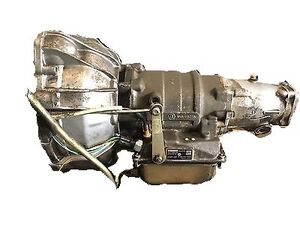
Transmission general data
3-speed automatic transmission 3HP22 was
produced by ZF company in 1973. This transmission was intended for rear drive passenger vehicles with motors M10, M20,
M30
of BMW product range (big coupes and sedans, 3, 5, 6 and 7 series). This automatic transmission
transmits the torque up to 320 Nm.
Number of gearsTransmission TypeDriveTorque (Nm)ATF (full capacity) LATF (change) LATF type3ATRWD3202.42Dexron II
Technical issues and repair guidelines
One of the most common sources of problems in this 3HP22 transmission is the governor. The governor is a shifting pressure regulator on the output shaft of the transmission. The gear shifting point according to the car speed depends on the above mentioned governor.The wear-out of niches for plastic rings on the hub of the last transmission clutch is considered to be another soft spot. This problem also may lead to the governor pressure loss.
How to repair this transmission (Videos)3HP22 valve body rebuild
Instruction manuals and useful linksLink typeSourceDescriptionwebwikipediaZF 3HP22 transmission
Transmission general data
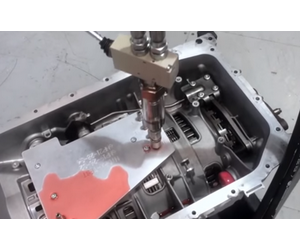
Leak test units allow checking circuit integrity for transmission units through use of hydraulic pressure. These tools guarantee time saving since modern models do not require removal of the transmissions off vehicles. It is a universal machine which merely requires appropriate leak test plate to fit any automatic gearbox. The 4L60 transmission, 4L80 transmission, ZF transmissions are some of the most demanded for this transmission service.
The answer to the question on the reason of oil flowing out of the transmission troubles many transmission specialists. Transmissions oil leakage is in the group of problems with which almost every driver ever found. Under the car there are oil stains that are gradually increased. Set of lubricants is considered to be an important part of the vehicle. Such a problem leads to major failures. Friction of the contacting parts goes uncontrolled, wear debris is stopped from leaving the drivetrain, the assembly doesn’t cool down. It is unsafe and could cause fire.
Various leaks at the junction of gearbox and engine most likely can occur due to the following reasons: wear-out or failure of seals, various defects in shafts and seals, emergence and increase of clearance in the shafts (input shaft, etc.), sealing compound fails to provide the desired sealing, loosening of clamp holdings, failure of properties of seals and gaskets and other effects.

Transmission general data
Balancing is used after all components have been replaced and subsequent welding is done. The process of balancing allows transmission service people to find out if there is a bad or uneven weld on the circumference of a Torque Converter. If it is identified, the operator can easily weld on a small amount of material or remove it. Performance transmission and racing transmission specialists pay special attention to Torque Converter balancing.
When you turn the ignition key the Torque Converter starts to rotate together with the engine. Torque Converter of about 250mm in diameter and of about 10 kg in weight imbalance in its RPM can cause such a serious vibration that the entire vehicle will be affected, including fastening elements of the engine and the automatic transmission.
Balancing machine for torque converters allows us to check imbalance of this element with guaranteed accuracy. Precision system implemented in these machines allow transmission repair experts to pinpoint exact place of excessive or insufficient weight.
Transmission general data
The Vacuum Test Unit is used to test the vacuum integrity of all Valve Body hoses and valves. This method of Valve Body testing is considered to be quite a traditional testing solution for transmission shops - it is a money-saver which does a straightforward job. At the same time it doesn’t provide the many advantages of the modern sophisticated transmission service tools. Vacuum tester is often used jointly with a Valve Body test equipment for remarkable results.
The vacuum test allows to evaluate the condition and wear of the valve (plunger) in the body of the hydraulic unit. A worn valve or a hole in the hydraulic unit may result in improper operation, reduced performance or malfunction of the automatic transmission. In most cases, it is possible to assess the wear of the hydraulic unit of the automatic transmission without the vacuum test. However, if you have repaired hydraulic unit with the help of special reamers and valves produced by such manufacturers as Sonnax, a vacuum tester is a must because the vacuum test allows you to quickly and easily test for leaks in the channels of the hydraulic unit.
Transmission general data
In the automatic transmission, the valve body serves as the hydraulic control center responsible for gear shifting and torque converter clutch application. Inside a valve body, one will see a maze of channels, different sets of valves, and a variety of solenoids. These all work together controlled by the transmission control unit or module (TCU or TCM) to direct hydraulic fluid through these passages to the valves activating the required clutch pack or servo to apply or release these elements causing gear changes and torque converter clutch application. Modulation of the components is what provides smooth gear changes over the range of throttle application or driving conditions.
Why is valve body testing important and necessary?
Valve body
testing covers a significant range of tasks. Among these, one may distinguish 5
principal ones as below:
Speed up the process of repair of a worn valve body,Be able to pin-point a source of malfunction within a valve body,Provide confidence in valve body repair for extended warranties,Be compliant with stringent quality requirements,Provide end-of-line testing for a new valve body as a factory product and performance valve body testing.
The only other viable option to test a valve body is to test-in the vehicle, which involves a large amount of labor and technician time especially on newer vehicles where installation and removal of the valve body may require other vehicle components to be removed to gain clearance. Simple remove and reinstallation of a valve body inside a car can take up to 4 hours to complete. If a shop is specializing in transmissions and valve bodies and repair volume is low, this might be an option that works for them, but most shops are competing on price and so the required technician time make s this an expensive option. The real issue with this method is when there is a fault or malfunction that is not obvious and the technician has to perform the install, test, remove, and repair procedure multiple times to try and identify the problem or worn circuit in the valve body. If a shop has any significant volume of transmissions to repair, the technician and owner simply do not have the spare time to do this and needs to avoid time-consuming troubleshooting road tests.
Subsequently, conventional scan tools and pressure gauges do not always suffice to determine what exactly is causing the trouble within your valve body, especially if it has significant mileage. An inexpensive vacuum tester is certainly a must-have for a quick bench test upon tear down. It serves as a cornerstone every time one starts valve body inspection and repair. A vacuum test can identify a worn valve or questionable circuit, but it may be difficult to determine the degree to which a valve, or a bore, is worn and it may not identify the wear as clearly as needed. A valve body tester emulates road conditions and actual hydraulic operation of the valve body in all gear ranges as well as near the normal operating temperature of the valve body. The valve body can be tested at a variety of pressures with temperature control and strict control of solenoid amperage to simulate the hydraulic modulation as gear shifts occur. The performance of the unit under test can then be compared against benchmark data in a graphical or tabular format. This allows a technician to identify faults or questionable data that are not able to be seen in the vehicle. The modern valve body test is a complex and eloquent tool that gives the technician the ability to identify the exact source of trouble, leaving little room for doubt and giving confidence that the repair has been performed correctly.
The ability to provide extended warranties and to keep warranty claims as low as possible have a direct effect on the reputation of a shop. In order to be confident in the repairs to offer these types of warranties it is important that the unit is thoroughly tested using consistent test practices. A shop with high warranty claims, even if addressed and the issues rectified, can suffer from unhappy end customers and this can have a direct effect on the reputation of the shop. Therefore, if one is concerned about delivering the transmission shop’s valve body repair guarantee and protecting the shop’s reputation, quality valve body test equipment is crucial.
Another important factor is compliance with certain requirements for a repaired product. This comes into play if a shop or remanufacturer enters in a contract with larger companies providing multiple repaired or rebuilt units. This is common in fleet accounts where the removal and installation of the transmission is not done by the shop remanufacturing the unit. When doing this kind of work there may be a requirement that repaired or remanufactured units meet a certain quality standard (confirmed by thorough testing).
One more application for advanced valve body testing is end-of-line testing. This is typically larger remanufacturing companies or even OEM that need to make sure that the unit just built is performing as per the specification and there has been no fault during the production process. This can also include performance shops that build valve bodies for racing or for heavy duty / towing applications. The volume may be lower, but the use of a valve body tester is critical in these operations as well.
History and principle of operation of a transmission valve body tester
Valve body test equipment started to become common among transmission repair shops in the early 1990s as valve bodies transitioned from hydraulic cast iron three speed units, to aluminum electronically controlled four speed units. During this pre-digital era the equipment was fully analog with multiple pressure gauges to show readings and even lights with pressure switches to show if there was a minimum amount of pressure in a circuit.Valve body
test equipment has started to gain among transmission repair shops of various
scales back in 1990s and during that pre-digital era the equipment was,
obviously, fully analogous with multiple readings shown on the external gauges.
At that point, the principal components of a valve body tester were the machine itself (mainly a pump and pressure regulation system, the corresponding test plates connecting the test unit to the machine and gauges, and a basic shift controller that would fire the solenoids on or off to achieve each gear). An operator would need to watch the gauges upon a gearshift and make a determination on the quality of the unit based on experience. Nowadays, the data acquisition and processing controller integrated into the testing process plays the key role in modern testing. At that point, the pivotal components of a valve body tester were the machine itself
and the corresponding test plates connecting the test unit with the tested
element. Nowadays, the data acquisition and processing controller integrated into the testing process plays another vital role. Here we may have a close
look at all the three key elements that were specified.
If we break down the key elements for modern valve body test machines, we can see there are three key areas:
1) The principal components of a modern Valve Body testing machine:
The hydraulic pump and motor,Suction and high-pressure filters,Input and output pressure transducers,Heating elements and temperature controllers,Proportional and gate valves,Oil tank (to be filled with automatic transmission fluid),Integrated personal computer or a portable laptop.
Based on this list, the idea is that the system feeds ATF into a valve body under varying pressure and temperature conditions. These would vary to emulate real-life driving conditions.
2) Valve Body and Solenoid test plates
and adapters
These adapters emulate the case connection for a valve body or the bore in a valve body for a solenoid and allow the unit to be connected to the test machine. Connection test plates may have orifices for compatibility with certain valve bodies and plumbing to closely emulate how fluid is fed in the vehicle. Connection hoses and cables differ depending on the model. Typically, plates and cables are model specific and it is one test plate and one cable for a certain model of valve body.
3) The control system to drive solenoids and data acquisition for recording and presenting test data.
With the advent of modern valve bodies coupled with mechatronics units, the task of powering and controlling solenoids is not getting easier or less critical. As there is currently no universal tool to test mechatronics components (link: https://go4trans.com/technical-valve-body-articles/advanced-hydraulics-testing-for-valve-bodies-why-there-is-still-no-universal-solution-for-mechatronics-assemblies/), valve body testers are designed to universally test the hydraulic parts of these valve bodies. With modern units, PWM solenoids require a special approach that is vastly different from ON/OFF solenoid testing and for this purpose more complex controller systems and software are required.
Data acquisition is much more crucial with testing of modern valve bodies. The ability to capture data at 500Hz-1000Hz is necessary to comply with up-to-date valve body testing standards. With 500-1000 reading per second, one can be sure that no data will be missing, and the valve body or solenoid faults will be easy to identify.
The acquired valve body data is then compared against benchmark data previously store in the system. This is done via graphical overlay of the tested performance data. With a visual graphical display pin pointing faults can be done quickly and easily.
What types of valve bodies can be tested?
Modern valve body testing systems are built to be universal and are suitable for transmission repair shops across the globe. The testing process itself does not change from a valve body to valve body. All units are tested hydraulically, and solenoids are checked electrically. The necessary part is that the manufacturer has to be able to provide a valve body test plate suitable for a new / particular valve body.
There are a few aspects of testing for various valve bodies worth touching on separately:
1) Latest model Valve Bodies with mechatronics, or TEHCM testing (for a thorough review, read the article: https://go4trans.com/technical-valve-body-articles/a-good-closer-look-into-mechatronics-units-testing/)
Generally, the mechatronic part is omitted from the testing circuit. There are 2 key reasons for this. Firstly, there is no universal tool that can test all varieties of TEHCM applications. Secondly, a transmission specialist really wants to test all parts separately – to be able to identify the valve body fault most clearly without questioning if it is a valve body or a TECHM programming/fault.
Power Test’s Axiline has a solution to test just a few types of TEHCM applications with their WinDyn Test Cube system. There is number of limitations with this system as the system can only test:
-6HP19, 6HP21, and 6HP26 mechatronics by ZF but not all types of these models (with exclusions by years),
- some GM (General Motors) models: 6L45, 6L50, 6L80, 6L90, 6T40, 6T45, 6T70;
- DQ200 (0AM) and DQ250 (02E) among DSG’s.
Another concern is whether this solution is worth the investment as the Test Cube by Axiline is nearly as costly as the valve body testing machine itself. The standard solution is to use corresponding TEHCM tools by OEM’s – like ZF Testman for ZF.
Other manufacturers of valve body testing equipment have omitted the mechatronic part from their test cycle.
2) Solutions for Valve Bodies popular
in all countries across the globe
Axiline specializes in the USA market and concentrates on the models that drive on the North American roads: GM, FORD, Chrysler, and Allison. For example, the Axiline solution line for GM is widely used globally on popular models such as 4T65-E, 5L40E, and 6T40/45. Some of the supported models are most common in the US becoming quite old – for example, 200C, 400. Concentration on the USA models is not surprising as the USA car market is the largest world market – however, this leaves transmission repair specialists from other countries of the world not covered.
Raytech or Transpeed, which are China-based, offer solutions based upon models popular on the Chinese roads - although they trade globally and strive to provide solutions across the globe.
Hydra-Test has opted for universality and the solution that covers all of most popular models globally and locally: German valve bodies by ZF and VW; American valve body models by Ford, GM, and Chrysler; Asian transmission valve body models by Hyundai, Kia, Toyota, Nissan, and more.
Kinergo’s Valve Body test machine, an emerging solution from the advanced post-Soviet industrial region, is covering what is in demand and the team provides solutions inspired by other manufacturers.
3) Continually adding new testing adapters and solutions
As a repair technician needing to stay current with the ever changing automatic transmission repair market one would want to invest in a tool that will be on pace with the trends, model updates, and new models of the industry. Therefore, it is vital that the likes of the 9HP by ZF, AC-60E by Toyota, 8 speeds by GM, the 10L by Allison, or latest CVT’s like JF016 are being added to the range of solutions by your supplier of automatic transmission repair equipment.
4) Custom-built solutions
If you are developing your own valve bodies or if you are producing performance valve bodies, it is necessary that the manufacturer of your equipment knows to handle solutions that are demanded by your company. A need for personalized valve body testing can be met with reluctance to take it on or a high cheque. However, for some manufacturers this is a good cause for faster introduction of newly-launched valve body models to their product range. For instance, this is how Hydra-Test took on heavy duty solutions: although the company specializes in the models for light-duty civil vehicles, they have introduced VOLVO CE (Construction Equipment) PT2116-PT2509 and PT1860-PT1861 as there was a demand for this.
How do valve body testers check individual solenoids?
Generally, valve body testing equipment allows for solid verification of solenoid operation. The technician can see how solenoids installed in a valve body perform in the valve body assembly. Here we shall focus on how valve body testers can be used with solenoids separately from the valve body.
If a transmission repair specialist is just beginning to repair and remanufacture their own valve bodies, they may opt for a solenoid tester and valve vacuum tester combination. A vacuum tester is conventional inexpensive tools – Sonnax vacuum tester is the option of preference.
There are several methods of solenoid testing but a most thorough check is with implementation of advanced solenoid testing equipment (check the solenoid testing equipment section). The question comes up on if a transmission technician has to have separate solenoid tester and valve body testing machines? The answer really depends upon the volume or work a shop has. If you can split the time needed to test solenoid and valve bodies on one machine then there are solutions to test both in a valve body tester. However, if the volume becomes such that testing solenoids holds up being able to test valve bodies, then the shop is really in a position of needing two separate machines.
The option of testing solenoids with the valve body testing equipment makes sense when you have lower volumes of work. This feature is easy to add as by default the hardware, software and the controller of a valve body testers is more advanced than that of solenoid testers. They only step needed is addition of solenoid testing blocks with a valve body tester so inquire if your potential supplier has the ability to easily add this feature to the valve body test machine.
Here is an example of the UK’s Hydra-Test add on adapter package for solenoid testing on their VBT Deluxe. A solenoid adapter plate is placed in place of a typical valve body pate and their line of solenoid test blocks fit exactly as they do in the solenoid machine. The solenoids can now be checked hydraulically and electronically with all the same quality of data capture and processing as the valve body testing.
Importance of hardware with transmission valve body test stands
Hardware plays crucial role in reliability of the testing equipment and certainly contributes to having the equipment up to actual standards as time advances. The are many internal components that serve to capture and process transmission valve body operational data. These are the pressure transducers, power supply, transducer distribution board, cabling kit and leads, temperature controller, and so on.
The hardware serves as the control center of a valve body test system and it is the key of valve body performance data processing by using pulse width modulated solenoid outputs, analog inputs, discrete inputs, frequency inputs, analog outputs, temperature sensors – as key data acquisition components.
Most often, suppliers of testing equipment develop and apply their own hardware unless there is a need for some specific solution. An example of past cooperation between companies in the industry was Mustang Dynamometer and PCS (Powertrain Control Solutions). PCS controllers were private labeled for Mustang as a means to support a large variety of transmissions in the mid-2000’s for their tests at the time. However, cooperation between a few parties in not a strategy to last long enough and the best approach is using own solutions.
Hydra-Test has brought the controller development in house with their initial release of their HTC-K controller and more recently the HTC-S controller. This is the latest controller capable of valve body and transmission testing. The hardware components here are built to last with extra protection and convenient modular system, so the system can grow as a customer needs more capability and/or as new units are added and need to be tested.
How to repair this transmission (Videos)Answermatic Valve Body Test machineKinergo Valve Body Testing machineHydra-Test Valve Body test machine guideHydra-Test Valve Body test machine overviewHydra-Test 0AM (DQ200) valve body testing on a benchZF 6HP19 - valve body testing on Chinese machineValve body testing explained A6MF valve body testing on Chinese testerVacuum testing with Sonnax toolsATS Diesel Valve Body testing on a bench
Instruction manuals and useful linksLink typeSourceDescriptionwebBuy Hydra-Test Valve Body tester
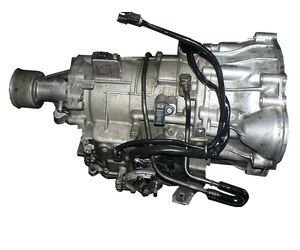
Transmission general data
The family of automatic transmissions V4A11 - V4A12 for 4WD (RWD- R4A11) drive of Mitsubishi Pajero Mini was designed by the AT (automatic transmission) department of Mitsubishi in 2000 simultaneously with FWD versions F4A11-F4A12. The difference between V4A11 and V4A12 is in slightly higher transmitted torque, but both versions use the same engine (0.7 liters). The 1-liter engine can be used only for F4A12 or R4A12 (AWD- V4A12). The V4A11 \А12 unit is mainly installed on AWD versions of Pajero Mini for a
Japanese market. These transmissions were aggregated with a minimum
4-cylinder engine (0.7 liters) The design of all sub-modifications
is quite similar, equally reliable, and this transmission goes so long that the cost of the machine
at the time the overhaul of the machine becomes comparable to the cost
of the bulkhead automatic transmission. The gearboxes were adapted for
different engines and different underfoot spaces of the Mitsubishi
mini-cars from (eK WAGON to Pajero Mini).
Number of gearsTransmission TypeDriveTorque (Nm)ATF (full capacity) LATF (change) LATF type4ATFWD/AWD3,52SP III
Technical issues and repair guidelines
The repair of these transmissions mainly consists of replacement of the filter and change of the transmission fluid.In most cases, the reassembly of the transmission, cleaning of the valve body and replacement of solenoids are performed by car owners. In many cases, the replacement of this automatic transmission with the used one turns out to be less expensive than its repair.
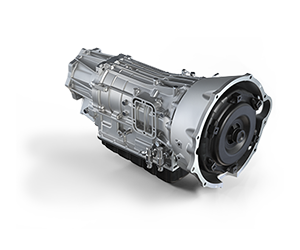
Transmission general data
AS69RC is a 6-speed A/T produced by Aisin and initially
intended for Ram 3500 HD. This gearbox took place of AS68RC in chassis cab
modifications for 2013. It transmits the drive torque equal up to 1150 Nm. In
terms of design this gearbox resembles AS68RC. AS69RC is large-sized and more
reliable than AS68RC and 68RFE. AS69RC has 3 planetary gear sets, 1 overrun
clutch, and electronically-controllable gear switching and the converter
clutch.
Number of gearsTransmission TypeDriveTorque (Nm)ATF (full capacity) LATF (change) LATF type6ATRWD/AWD1150136,8Mopar ASRC
Technical issues and repair guidelines
Specialists assume that the following service procedures are required for this transmission: change ATF every 30 thousand miles or 2 years, replace gearbox filter every 60 thousand miles or every 4 years. Starting from 2014 the modification AS66RC appeared to replace AS69RC in Dodge Ram trucks.
How to repair this transmission (Videos)AS69RC Teardown Part
Transmission general data
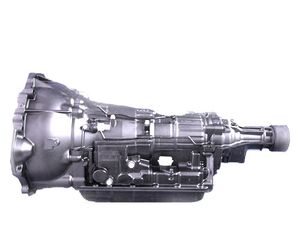
4N71B 4-speed automatic transmission 4N71B was
produced in 1984 for rear wheel drive Nissan 300ZX.This transmission is a
successor of very famous 3-speed modification 3N71B. Since 1989 this transmission was modified for Mazda 929 under the name N4A-EL. In 2000 4N71B was used as a basis for updated JR401E, which is used with 3-liter engines V6.
Number of gearsTransmission TypeDriveTorque (Nm)ATF (full capacity) LATF (change) LATF type4ATRWD2807AT-Matic J
Technical issues and repair guidelines
This transmission appears in repair services very rarely. Due to its simple design specialists usually just need to replace worn-out spare parts and friction clutches to bring this transmission back to life.
How to repair this transmission (Videos)Valve Body Shift Kit Installation
Instruction manuals and useful linksLink typeSourceDescriptionpdfwaghornswood.net.nzRepair manual E4N71Bpdfshinseiauto.comScheme 4N71B
Transmission general data
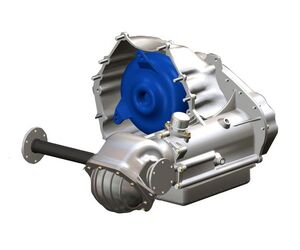
The
THM425 (and later 325) is a 3-speed automatic gearbox designed and released by
GM. The structure of the THM425 is based on the THM400; most spare parts in
these gearboxes are directly interchangeable and some others can be adjusted
with the help of slight modifications. The THM425 was designed for Oldsmobile
Toronado and Cadillac Eldorado.
Number of gearsTransmission TypeDriveTorque (Nm)ATF (full capacity) LATF (change) LATF type3ATRWD12,36Dexron II
More lightweight gearbox THM325 took the
place of the THM425 in both car ranges in late 1978. Since 1979 and later longitudinal
engine FWD cars have been equipped with the THM325. The THM325 was upgraded to
THM325-4L with an overdrive added in 1982, but all cars with this gearbox
switched to more-common transverse engine mounting in 1986.
How to repair this transmission (Videos)TH-400 rebuild part 1TH425 Governor Gear RemovalTH400 Rebuild: Governor
Transmission general data
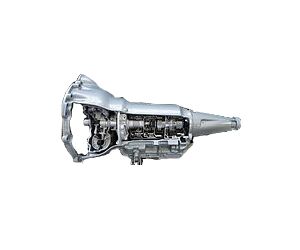
The automatic gearbox THM250 is based on the
THM350. This gearbox was released in 1974 and was applied in Chevrolet cars.
The THM250 was developed and designed by GM as a part of Turbo Hydra-Matic family
of automatic gearboxes. When taking into consideration the internal structure
of the gearbox, the THM250 is very similar to THM350, apart from the
intermediate clutch package with a band adjuster.
Number of gearsTransmission TypeDriveTorque (Nm)ATF (full capacity) LATF (change) LATF type3ATRWD9,55,6Dexron II
Generally, the THM250 was attached to small displacement engines. In 1976 this gearbox was taken out of production and was replaced by the light-duty THM200 transmission. However, the THM250 reemerged in 1979 as the THM250-C as a result of numerous issues withTHM200/200C. The 250C version had a reduced weight thanks to the use of a central gear shell applied the THM350, but with three holes to decrease flywheel mass and the low/reverse piston with eight notches.
Instruction manuals and useful linksLink typeSourceDescriptionpdfoldcarmanualproject.comRepair manual THM250
Transmission general data
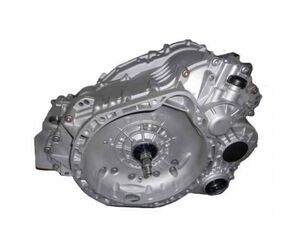
The 722.8 transmission (CVT) has been produced since 2005 and mainly used on Mercedes А170. It is also installed on other cars of А series with engine capacity from 1.5 to 2.0 liters.
The design of this CVT is based on model patent CVT with the "push" belt produced by Bosch-Fondorn and the most expensive spare part – the belt itself. This CVT is the analog and competitor of a Japanese CVT JF011E.
Number of gearsTransmission TypeDriveTorque (Nm)ATF (full capacity) LATF (change) LATF type∞CVTFWD30076236.20
Technical issues and repair guidelines
Overhauls of old cars with this transmission usually require the kit of spare parts (gaskets and seals from Autoline) and the kit of friction components. Friction components are replaced quite often in the process of the transmission reassembly, because the 722.8 unit is removed together with the engine, and easily wornout frictions already have a negative impact on the clutch. Driving with worn rings and seals lead to oil starvation and premature burning of quite durable friction components.
The fluid in 722.8 should be changed timely together with filter. The fluid and its purity are critical for cones and belts of this CVT, therefore for old 722.8 units, it is recommended to add the fluid at every opportunity and check its level with a service gauge.
The electrical part always causes a lot of problems in Mercedes transmissions. The board was made by the partnering company of Mercedes and after the warranty period you can face such problems as contaminated fluid (metal dust) and overheating. Steel dust magnetized on sensors lead to their failure.The belt is another vulnerable place in this advanced unit. Mercedes used the belt with additional resource on durability and reliability for its CVT.
Shaft bearings are the first among hard parts to get out of order (like with Jatco CVTs) because of lateral dynamic loads. The end of shaft-cones service life means the end for the CVT unit itself. The lifespan of bearings is highly dependent on the fluid cleanness, and most importantly - on its operating temperature.
How to repair this transmission (Videos)Gearbox control unit sensor
Instruction manuals and useful linksLink typeSourceDescriptionwebactronics.euMercedes-Benz Temic VGS (722.8)pdfautogear.fiScheme 722.8
Transmission general data
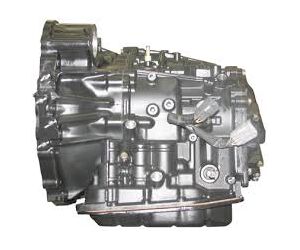
The 5-speed automatic gearbox U250E is installed on all FWD and AWD vehicles produced by Toyota and Lexus with engine capacity from 2.5 up to 3.5 liters.
The whole range of U150 is more comfortable and economically viable (and high priced) alternative to "invincible" 4-speeds U140-U240. The 6-speed automatic gearbox U660 was produced in 2007 for Toyota Camry and Lexus car drivers who are more demanding of gear shifting process. The U150, 151 – can transmit a bit higher torque at low speeds than U250E. The U151F unit is intended for 6-cylinder full-wheel drive vehicles- RAV4, Highlander, Sienna.
Number of gearsTransmission TypeDriveTorque (Nm)ATF (full capacity) LATF (change) LATF type5ATFWD/AWD94Toyota Type T-IV
Technical issues and repair guidelines
Major repairs of U150-250 units almost always starts with the torque converter repair and spare parts replacement ( lockup).The set of pistons is also included in the typical list of spare parts for repair of this transmission. The pairs of firctions (steel disks in the Overdrive drum) is the first component to get burned in these units. The second spare part to be considered is burnt Direct clutch (happens if the vehicle continuously operates with burnt Overdrive frictions).
The kit of friction components is ordered as frequently as the Overhaul kit especially when repair specialists have to deal with gearboxes with burnt ATF. Early wear of the Overdrive friction clutch is linked to the design of the rear cover, which plays the backup role for this clutch cover (drum). The other common issue for majority of these automated gearboxes is related to problems with pump seals and axles. The pump bushing is usually ordered together with abovementioned spare components. The main symptom of the problem is the ATF leakage through the pump seal. The main cause of this problem is an aggressive driving style and a long-term driving with burnt torque converter clutch.
Electrics in U250-150
Problems with electrical parts in U250 and U151 gearboxes are often triggered by issues with the valve body.The valve body U250 (2002-2004) frequently could not maintain set parameters, old (massive) solenoids couldn’t cope with tasks, therefore the valve body wears rapidly. In 2005, the valve body was updated after replacement of solenoids (the valve body itself was left unchanged). Solenoids for valve bodies of U250 and U151 units ranges for different cars and selected according to VIN-code of the car.
Peculiarities of early repairs of U250 and U151 units are related to the fact that the “electric clutch” was widely used in 2000-th and engineers refused from the "full-proof" comcept and did not limit capacity of the driver related to the aggressive driving style, that may lead to burning of friction components and other elements.
How to repair this transmission (Videos)U151 Teardown
Instruction manuals and useful linksLink typeSourceDescriptionpdfwww.at-manuals.comRepair manual ECT U150Epdfwww.at-manuals.comRepair manual U150Epdfwww.at-manuals.comScheme U150Ewebwww.at-manuals.comSolenoid identification U150EpdfSonnaxValve Body Layout U151E/F, U250E pdfSonnaxVacuum test valvebody U151E/F, U250E