
Technical articles
Technical Transmission General
General Transmission issues are varied and may include several causes and ways of treatment. Transmission experts share their knowledge and provide useful tips for the industry people to follow.
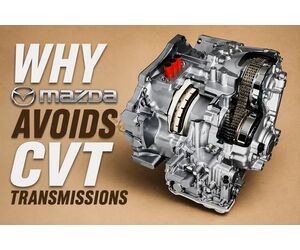
Among different types of car transmissions,
CVTs are notable for not having gears at all. It uses a set of pulleys and
belts to provide numerous ratios for a variety of driving situations. While it
may seem like an ideal solution for some auto enthusiasts, as you won’t be
bothering with gears driving this car, some car brands, such as Mazda, just
disregard the CVT.
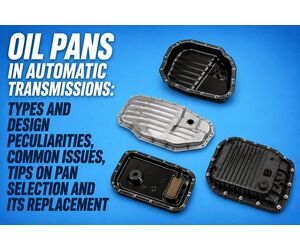
In automatically shifted cars an oil pan
services as a so-called storage for ATF, and ensures for a convenient access
point to the transmission filter and fluid. For automatic transmissions (ATs)
ATF is vitally important, as it lubricates transmission parts and prevents
overheating, thereby avoiding early wear of the transmission unit.
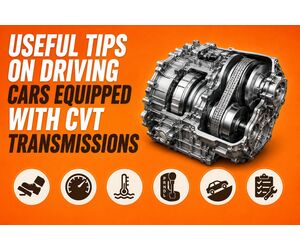
Continuously Variable Transmissions (CVTs) have
been around for quite a long time, but for some drivers this type of
transmission still remains a mystery. CVT transmissions have certain design
peculiarities, which have a significant impact on rules of operation of these
units. In this article, we will consider the main aspects of driving CVT-equipped
cars and learn how to avoid early visits to repair shops.

The main differences between these two units lie in the fact that the
2WD output shaft is longer than the 4WD version and 4WDs are connected to a
transfer case. Some carmakers manufacture their 2WD transmissions in such a way
that they can be transformed into 4WD models.
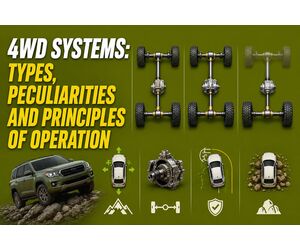
The design of a four-wheel drive vehicle
ensures the capacity of transmitting torque from the engine to all four wheels
of the vehicle. Structural arrangements of 4WD systems allow realizing the full
power potential of the car, its road handling, active car safety. The
four-wheel drive car can be abbreviated as 4x4, 4WD, or AWD.

Progress does not stand still as new technologies emerge in the automotive
industry every day. Special attention should be paid to significant achievements
of automobile engineers in the field of automobile technologies. Pre-selective
transmission technologies gained significant popularity with the release of
DSG6 and DSG7 transmissions designed by Volkswagen.

In
the second half of the 90s, marketing
specialists of Toyota noticed that automated (or robotic)
manual gearboxes gave been gaining popularity in Europe. Thus, the company decided to develop its own robotic gearboxes FreeTronic and Multimode, which are considered by many experts and car
enthusiasts to be far from the most successful Toyota designs.

If
you've ever considered Porsche models as an option when buying a car, you must
have come across an unusual abbreviation PDK, when examining Porsche’s
specifications. This advanced transmission solution, built in-house, ensures extremely
fast gear shifting and found application in numerous Porsche models for a good
reason.

There is a
family of automatic transmissions, which surprises even ardent admirers of
manual transmissions by its reliability. We are talking about the ZF8HP family
designed and manufactured by the German company ZF Friedrichshafen.

Clutch assembly is not an easy task that
requires time and perseverance. To avoid frequently needless and expensive
replacement of the whole unit, prior estimation is a must. In such cases, ZF
Aftermarket is eager to share its solid experience in the transmission repair
with the repair shops, helping to prevent errors specifically related to clutch
plate mounting.

CVTs have one “mysterious” component named a fluid
degradation counter (or just fluid counter), which raises many questions among
auto enthusiasts. Owners of cars equipped with CVTs constantly argue whether it
is necessary to reset the oil counter after the oil change.

In the
early 50-es, automatic transmissions were widely used on many American cars. The success of this innovative transmission
didn’t go unnoticed in the USSR. In this article, we will consider the main
stages of transmission technologies development in the USSR on the examples of major
Soviet carmakers ZIL, GAZ, and VAZ.