Remarkable Engineering Idea Implemented in 'Doug Nash 4+3' Manual Transmission
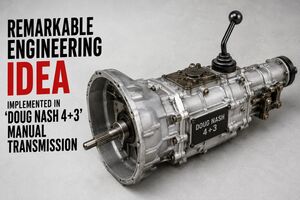
Remarkable Engineering Idea Implemented in 'Doug Nash 4+3' Manual Transmission
Each year, brainy automotive engineers come up with more and more technically-advanced transmission solutions, which amaze car enthusiasts with their performance capacities and fuel economy rates. Nowadays, car manufacturers became increasingly alienated from classic manual transmissions and shifted toward highly-demanded automatic and hybrid transmissions. But it should not be assumed that only modern highly-sophisticated units can leave a lasting impression and that there has never been some place for ingenuity in the field of the transmission development. For instance, we can look back to the 1980s when the Chevy Corvette C4 hit the market with a mysterious 'Doug Nash 4+3' manual transmission.
This design concept is an unusual
mixture of a 4-speed manual paired with an automatic overdrive. Generally the
OD worked in the upper three gears, hence the name "4+3".
That’s how you shift 'Doug Nash 4+3' transmission
The history of this uncommon gear
shifting solution dates back to the late 1970’s, when BorgWarner decided to
stop manufacturing of 4-speed manuals and sold specifications for the “Super
T10” gearbox to a legendary drag racer Doug Nash, who established Equipment
& Engineering after he finished his racing career.
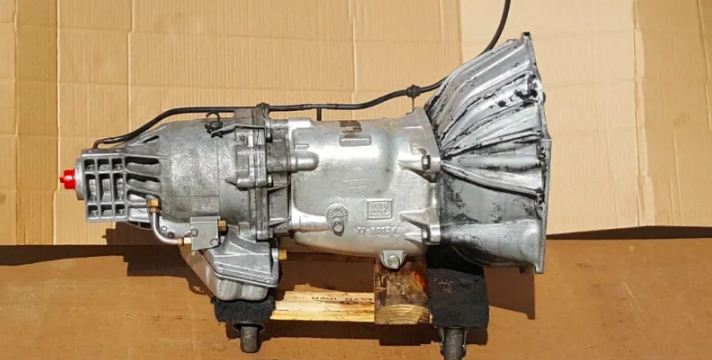
'Doug Nash 4+3' manual transmission
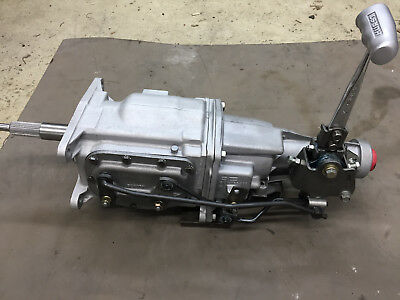
Super T10 transmission
Initially, Nash designed engine solutions for
American automakers. Subsequently, he produced a series of 4- and 5-speed racing
gearboxes, which brought him great glory. These units turned out to be so
efficient, he was contacted by Chevrolet to provide his "4+3"
solution, which in practice was a modified version of the “Super T10”
transmission. Nash sold its uncommon gearbox to GM and eventually this
technology found application on the 1984-88 Corvettes. It is claimed that GM
used this technology in order to comply with new fuel economy standards. Later,
this gearbox was replaced by a 6 speed manual solution to reduce engine rpm.
In practice, the “4+3” gained a somewhat
controversial reputation. From the point of view of engineering design, it is
an amusing solution, but on the road this transmission became not the best example
of quality and robustness. A particular criticism is referred to the overdrive
unit, which is sadly remembered for a wide range of issues.
Check out how 4+3 overdrive function operates
According to posts on some internet forums, the Overdrive feature frequently gets out of order. If this happens, the 4+3 transmission becomes a standard manual solution with no overdrive. The key issues were defects with bearing in the carrier assembly, a direct clutch thrust washer breakdown, and a pump sealing issue. This strange manual/automatic solution can hardly be considered as any king of breakthrough in the automotive engineering, but its design uniqueness certainly worth to be noticed as a bright example of old-school engineering.