
Last articles
Technical Transmission General Articles
Technical Transmission General
General Transmission issues are varied and may include several causes and ways of treatment. Transmission experts share their knowledge and provide useful tips for the industry people to follow.

The most common symptom of the automatic
transmission malfunction lies in kicks and jerks during the process of gear
shifting. In this article, we will explore the main causes of kicks and jerks
in automatic transmissions and give some recommendations on how to deal with
such issues.
A well-known car enthusiast Matt Farah
has recently proved technical superiority of automatic technologies, showing that it’s real to “clutch kick” with Porsche’s PDK transmission in a 911 GT3
RS.
Nowadays,
many modern cars (passenger cars as well as SUVs) more and more often are
equipped with a CVT transmission instead of a conventional automatic
transmission. Transmission fluid in CVT transmissions plays
no less important role than in conventional automatic transmissions. Thus,
well-timed changing of transmission fluid in the CVT unit is considered to be a
key maintenance procedure.
Today, many car owners can quickly and easily
change TFs in their cars. As a rule, after each TF change they have a canister
full of used fluid that lost its useful qualities. Subsequently, many drivers
frequently do not know what to do with used oil and how to dispose of it. It
this article, we will consider what should be done to used fluid.
For car enthusiasts seeking a car with enhanced
performance characteristics, the Mercedes-AMG’s model line-up is certainly one
of the first that worth considering. The German brand integrates a lot of
advanced performance-oriented features in its models, and some of these cars
come with an unusual sports transmission named as AMG SpeedShift MCT. In this
article we will consider the main design peculiarities of this unit, its
modifications and principle of operation.
Go4trans.com has already highlighted some basic
information on the 2020 Supra transmission swap project performed by EAG in one of our previous articles. This time we
want to delve into the technical side of the project with the help of numerous
videos provided by EAG and learn more about the company itself.
Many drivers know about the importance of ATF
change, but, unfortunately, they frequently forget about filter replacement. In
this article, we will learn why it is important to timely replace automatic
transmission filters, examine their types, and become familiar with their
replacement frequency.
Constantly accelerating pace and growing road
traffic in cities often forces you to make hasty decisions when you are behind
the wheel to reach the destination point in time, but in some cases it happens
at the expense of the car’s operability. For instance, it has been widely debated
on how it will affect the car equipped with the automatic transmission, if you
shift your car from R to D gear while still moving backwards.
Among different types of car transmissions,
CVTs are notable for not having gears at all. It uses a set of pulleys and
belts to provide numerous ratios for a variety of driving situations. While it
may seem like an ideal solution for some auto enthusiasts, as you won’t be
bothering with gears driving this car, some car brands, such as Mazda, just
disregard the CVT.
In automatically shifted cars an oil pan
services as a so-called storage for ATF, and ensures for a convenient access
point to the transmission filter and fluid. For automatic transmissions (ATs)
ATF is vitally important, as it lubricates transmission parts and prevents
overheating, thereby avoiding early wear of the transmission unit.
Continuously Variable Transmissions (CVTs) have
been around for quite a long time, but for some drivers this type of
transmission still remains a mystery. CVT transmissions have certain design
peculiarities, which have a significant impact on rules of operation of these
units. In this article, we will consider the main aspects of driving CVT-equipped
cars and learn how to avoid early visits to repair shops.
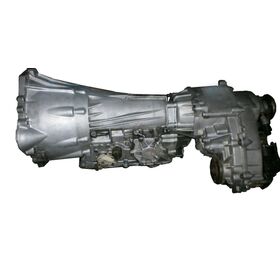
The main differences between these two units lie in the fact that the
2WD output shaft is longer than the 4WD version and 4WDs are connected to a
transfer case. Some carmakers manufacture their 2WD transmissions in such a way
that they can be transformed into 4WD models.