New Toyota Developments
New Toyota Developments
Recently Toyota has presented new developments based on the modular architecture named as Toyota New Global Architecture (TNGA). In this article we will review these innovations and their main features.
Direct Shift-CVT
The main purpose of any gearbox is to reach the
highest possible efficiency, enhance engine operating ranges, and ensure accurate
gear shifting. To achieve these goals, Toyota engineers put a lot of energy to
decrease mechanical loss, introduce a wider gear range, and enhance shift
tracking. These ideas were implemented in new Toyota gearbox solution.
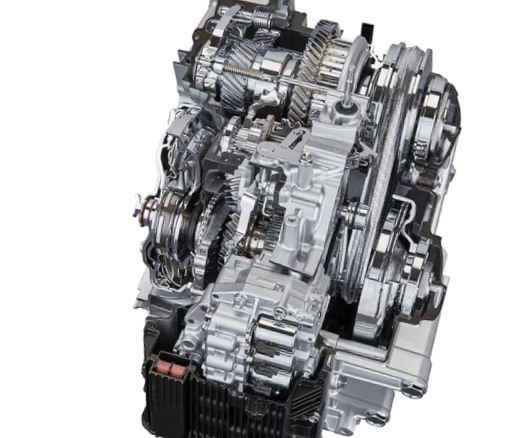
It is claimed that Direct Shift-CVT is the world’s 1-st gearbox with a “launch gear”, which ensures a better performance in lower gear ratios, where the belt mechanism is less effective. In practice, it means that to start moving this new transmission applies a mechanical gear (like in common manual or automated transmission), but after building up speed the gearbox switches to the CVT operating algorithm with engagement of pulleys and belt. Due to lower input load on these components, engineers managed to reduce their (pulleys and belt) size that resulted in 20 % increase of speed shifting. A smooth shifting is ensured by the TCM designed on the basis of concept used in automatic gearboxes. The structure of this gearbox enhances the capacity of the belt gearing and extends the range of gear ratios. Toyota claims the new gearbox enhances both operational characteristics and fuel economy when comparing it with existing CVTs.
New 6-speed manual gearbox
According to
representatives of Toyota, new 6-speed manual gearbox is mainly intended for the
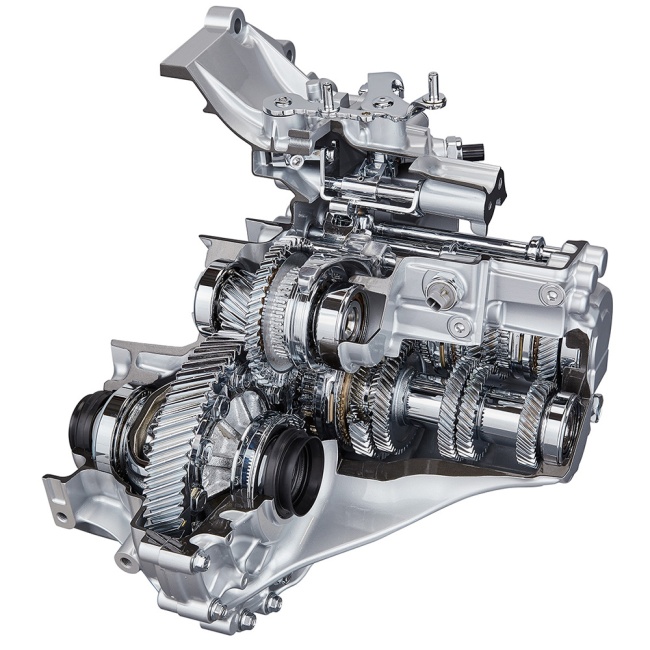
European market. The gearbox has the torque capacity up to 280 Nm. The weight
of this gearbox was reduced to 40 kg (-7 kg) and the length was shortened to
327 mm (-24 mm) in comparison with the previous analog. The gearbox was also
complemented by the system, which automatically helps the engine to gain
optimal RPM speed when shifting gears.
Dynamic Force Engine
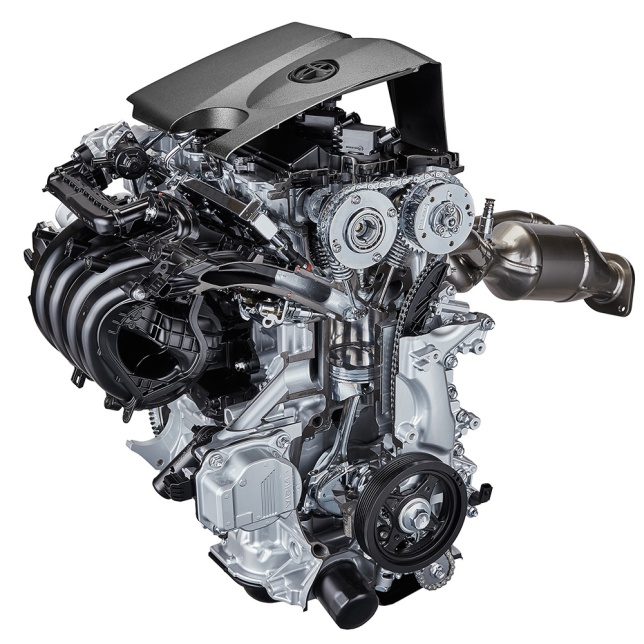
The 2-liter engine of the Dynamic Force Engine family was equipped with piston skirts with laser processing, valve seats with laser cladding, system of combined fuel injection, and electric water pump. The angle between the intake valve and the emission valve was increased. This engine can operate independently or as part of a hybrid system.
The engine has the power
equal to 171 hp (horsepower) and 205 Nm of torque and for hybrid these
parameters are different (146 hp and 180 Nm respectively). The new engine will
be firstly installed in Toyota Auris. The hybrid modification based on the
engine 2.0 will be characterized by low fuel consumption and linear
acceleration.
Toyota Hybrid System (THS
II)
The new hybrid system with 2.0 liter internal
combustion engine (mentioned above) was equipped with reduced control
electronic module, improved electromotor and generator components, more compact
and lightweight accumulator unit.
Dynamic Torque Vectoring AWD and E-Four 4WD
Toyota also introduced new Dynamic Torque Vectoring
and E-Four AWD systems. Dynamic Torque Vectoring AWD is developed for vehicles
with gasoline engines. This innovation is complemented with the torque vectoring
system, which divides the torque between wheels of the back axle. It also has
two cam clutches with the ratchet, which help to disconnect the back axle from
the engine and completely disengage the cardan shaft. This solution allows auto
owners to significantly save fuel in certain situations.
E-Four 4WD, in turn, is developed for hybrid cars and
differs from previous analogs by increasing the torque transmitted to the back
axle. This system transmits 30% more of torque to the back axle. The
application of this new solution ensures optimal distribution of torque between
rear wheels according to road situations.
According to Toyota officials, 80% of Toyota cars will
be equipped with presented solutions within the next 5 years.