Most saving type of transmission
Most saving type of transmission
One of the most important questions that anyone planning to buy a car has to answer is: "which gearbox should I choose: automatic or manual?" Increasingly, car owners choose the automatic option, which is not surprising: driving a car equipped with an automatic is characterized by simplicity and convenience. Also, an important factor when choosing is the cost-effectiveness of use. In this article we will analyze, which of the units will allow the owner to save more on fuel.
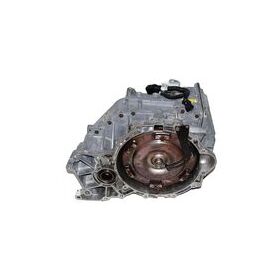
Option # 1: Torque Converter automatic
transmission
This is the most standard version of the
automatic transmission, installed on most modern cars. The key feature of this
type of transmission: the device does not have a clutch, its functions are
performed by a Torque Converter. In terms of comfort of use, this option is
probably the most convenient. However, in the process of using this type of gearboxes,
the car owner faces a significant disadvantage – very high fuel consumption. Of
course, car brands are constantly working to reduce this, but to date, not
every manufacturer has managed to achieve acceptable results. As a rule, they
try to solve the problem by installing quite complex devices – so-called
blockers that require frequent and expensive maintenance. Accordingly,
manufacturers install such devices only on the most modern and expensive cars.
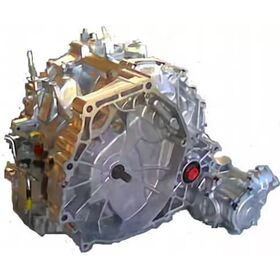
Option # 2: CVT’s (also known as a
stepless transmission, or variators)
The way CVT’s work is as simple as it is
amazing. The mechanism consists of two shafts that have the shape of a cone. A
belt or chain is stretched between them, giving traction. Thanks to this
device, the gearbox and gear changes are incredibly smooth and unobtrusive.
Owners of cars equipped with such devices note a certain unpleasant monotonous
hum created by the gearbox, which, in principle, is not a huge disadvantage.
Thanks to the complex variator system, the continuously variable transmission
is one of the most cost-effective types of automatic transmissions.
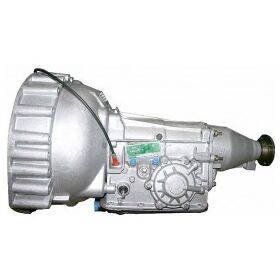
Option # 3: Robotic gearbox
In the matter of fuel economy, the
so-called “robots” are the undisputed leader. This is explained quite easily:
there is almost no difference between the principle of operation of an ordinary
manual transmission and a robotic automatic. The only difference between them
is that the direct switching is performed not by the driver, but by a robotic
system.
Of course, there is a difference between
these two options. Gear changes performed by the “robot” occur with a
significant hitch. Drivers who are used to other versions of gearboxes may
initially react to this moment with some irritation. Nevertheless, this
problem, apparently, will be fixed in the near future. Robotic gearboxes that
take control of two clutch systems at once have already appeared on the market.
The principle of operation of such boxes is quite simple. Gears are divided into even and odd, and each of these categories is controlled by one of the clutch systems. This allows you to significantly increase productivity and reduce the pause between gear changes.