
Technical articles
Technical Transmission General
General Transmission issues are varied and may include several causes and ways of treatment. Transmission experts share their knowledge and provide useful tips for the industry people to follow.

Nowadays, there is still no ideal solutions on
how to transmit torque from the engine to the drive wheels — actually, there’s
not even a universal agreement on the best location for the switching mechanism
that controls the ratio changes.
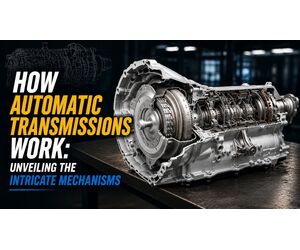
Automatic transmissions have revolutionized the driving experience, providing seamless gear shifting and effortless maneuverability. But have you ever wondered how these marvels of engineering actually work? In this comprehensive article, we will take a deep dive into the inner workings of automatic transmissions
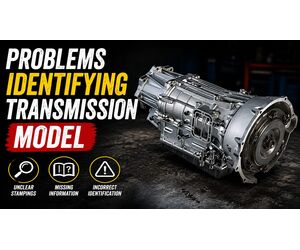
Identifying the exact model of an automatic transmission can sometimes pose challenges due to the lack of visible identification markings, faded labels, or variations across vehicle years and trims. In this article, we will explore the common challenges encountered when identifying automatic transmission models and provide effective strategies to overcome these obstacles.

Maintaining a healthy transmission is crucial for the smooth operation and longevity of your vehicle. Regular maintenance, such as a transmission flush, plays a vital role in preserving its performance.
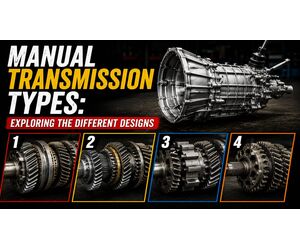
A manual transmission is a house of various components like gears, shafts, and various selecting mechanism that are arranged in a special fashion to provide appropriate torque and speed ratios to compete with the challenges provided by the different road conditions.
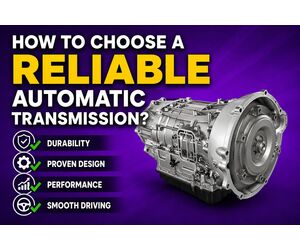
When considering a car purchase, reliable automatic transmission is a huge deciding factor. CVT transmissions are considered the most efficient and reliable type of automatic gearbox. Is it true?
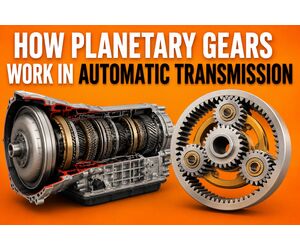
An automatic transmission uses planetary gearing, also known as planet gears, to change the output speed and torque of a vehicle. A gear system consists of a central sun gear, a set of planet gears and an outer ring gear.
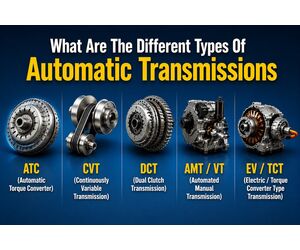
The most common type of automatic transmission is the Automatic Torque Converter (ATC), which uses a converter friction clutch and a clutch transmission to control the engine speed. It is similar to a manual transmission but uses a torque converter instead of a clutch.
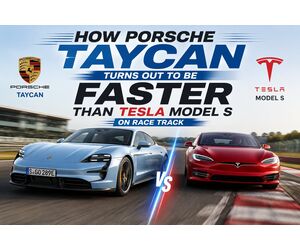
Recently,
Top Gear arranged an exciting speed competition between the Tesla Model S
Performance and the new Porsche Taycan Turbo S. Despite the fact that the Tesla
had an edge in weight and power, the German car came out victorious in the 0-60
sprint. The
secret of this result lies in one important powertrain difference between these
two great cars, namely the transmission unit.
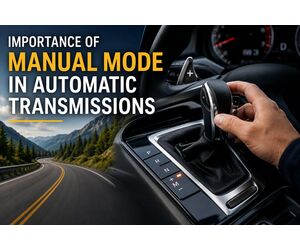
Rapidly growing share of automatic
transmissions in modern vehicles made it possible to increase the level of
comfort on the road, optimize the process of gear shifting and fuel economy,
and to implement some features related to the road safety. All these benefits
are particularly important on urban roads with heavy traffic. But why designs
of automatic transmissions still include a manual mode of operation?

It is well-known that modern automatic
transmissions are much more complex than conventional manual transmissions, and
therefore in addition to standard driving modes like D (Drive) and R (Reverse)
automatics frequently have more additional features and operating modes.
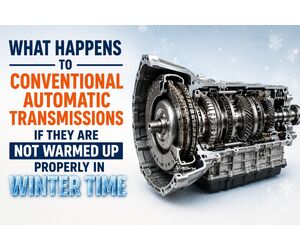
With winter approaching, car owners perform
necessary measures to prepare their cars for cold weather and icy roads.
However, some inexperienced owners of cars equipped with automatic
transmissions frequently do not know how cold weather may affect transmission
units and frequently disregard such a simple procedure as a transmission
warm-up. In this article, we will consider how ignoring of the automatic
transmission warm-up may affect your vehicle.