
Transmission Diagnostics & Repair
Common Transmission Problems, Diagnostics and Repair Procedures
Technical guides on automatic transmission diagnostics, repair procedures, component testing, failure analysis, and service methods for transmission specialists, rebuilders, parts suppliers, and repair professionals.
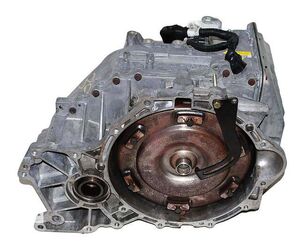
Transmission general data
The 6-speed automatic transmission BTR М11 with east-west positioning was installed on New Actyon (Corando С) in 2010. This transmission was paired with the 2-liter diesel engine having the torque up to 380 Nm. In 2012, after implementation of some changes the М11 unit was modified with introduction of different improvements. This transmission is intended for FWD as well as AWD SUVs.
Number of gearsTransmission TypeDriveTorque (Nm)ATF (full capacity) LATF (change) LATF type6ATFWD/AWD3807,54SsangYong 0578-244021
Technical issues and repair guidelines
Typical repair procedures for this transmission include reassembly and replacement of rings, seals, and gaskets (Overhaul kit). In many cases, the whole set of friction components is replaced by repair specialists. The wear-out of frictions leads to clearance increase in clutch packages. Abnormal (increased) clearances in clutch packages (and braking drums) lead to jolts and increase the risk of vibrations under load. Replacement of the brake band with a servo piston is performed in case of vibrations detection in the B1 (555) Drum or shifting with the kick or there is uneven wear-out of servo piston and brake clearance.
The necessity to replace of the rear planetary gear in the М11 transmission lies in overloading caused by aggressive driving and neglect of the automatic transmission maintenance services. The oil pump is one of the most popular issues in the M11 unit. This pump breaks down in situations when the overhaul of the transmission and its torque converter is delayed for a long time, consequently leading to extreme vibrations in the torque converter, complicated by contaminated fluid. The piston of the В2 brake package is frequently replaced in this transmission. This piston gets out of order because of overheating and a long-term operation with vibrations. Solenoids are included in the list of commonly replaced spare parts. The M11 transmission design includes 6 VBS solenoids with different holders.
How to repair this transmission (Videos)New Actyon BTR M11
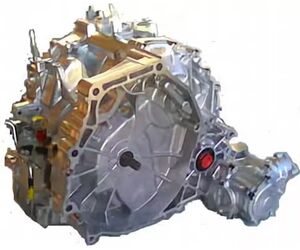
Transmission general data
MENA is a continuously variable transmission of the
first generation produced by Honda (all range including MENA, SETA, SENA, META
has a common name Multimatic). These transmissions had been installed in Honda
HR-V of the first generation from 1998 until 2005. In fact, it is one CVT which
has 4 modifications.
Number of gearsTransmission TypeDriveTorque (Nm)ATF (full capacity) LATF (change) LATF type∞CVTFWD5,93,2Honda Genuine CVT
In fact, these CVTs (together with M4VA (S4VA,
S4PA, S4MA)) are considered to be one of the oldest CVTs produced by Honda.
As a matter
of fact, it is one CVT in several modifications. Modifications of CVT are bound
to letter designation of the car body:
·
GH1
– MENA
·
GH2
— SETA
·
GH3
– SENA
· GH4
– META
Typical issues
Honda CVTs related to the Multimatic series
(META/SETA/SENA/MENA) usually have the same issues as CVTs of the M4VA
(S4VA,S4PA,S4MA) series. Actually, META series was designed on the basis of the
M4VA
-Problems with starting from the rest (jerks,
speed drift when applying D+brake). This problem is fixed by replacement of the
start package valve. In neglected cases specialists replace the start package.
-Problems with speed drifts in the process of
acceleration have 2 solutions: 1) Replacement of the gear ratio valve 2)
replacement of seals on the input shaft. This procedure requires partial
disassembly of the gearbox. It is desirable to use the original repair kit of
gaskets.
-Problem with the reverse. This problem is
caused by damage of reverse brake elements. This problem is solved by CVT
disassembly and welding. In addition, it is required to replace piston rubbers
of the reverse brake – these rubbers may tear leading to problems with the
reverse.
To prevent any further problems with the
reverse, it is recommended to replace reverse friction clutches.
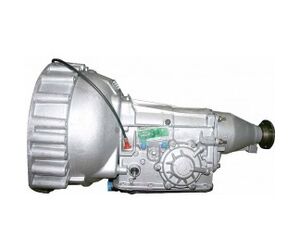
Transmission general data
BW65/BW66 automatic transmission is mounted on
the BMW Bavaria (1971 – 1974) and Jaguar XJ6 (1980-1987). This complex system
combines electronic, mechanical and hydraulic components. But despite of high
degree of safety some problems may occur in the process of transmission
operation.
Number of gearsTransmission TypeDriveTorque (Nm)ATF (full capacity) LATF (change) LATF type3ATRWD104-4,5ATF Type F
Technical issues and repair guidelines
When the slippage takes place during the operation of this type of transmission it may lead to slow gear-shifting and vibrations, therefore it is an important signal for visiting repair services.
The most common problems related to this transmission are:
- shortage or surplus of oil;
- long slippage;
- sharp driving dynamics.
The sleeve and other parts of BW65/66 transmission can get overheated that usually leads to overheat cracks and other mechanical damages.
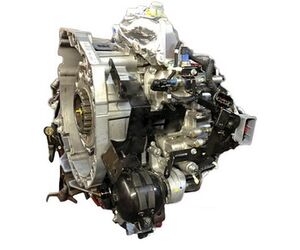
Transmission general data
The
6-speed C635 dual dry clutch transmission (DDCT) was produced by Fiat and was
presented in 2010 with AWD, FWD, and manual versions. Since then, this
transmission has been installed on Alfa Romeo 159, Brera, Gulia, Milano, MiTo,
Spider. This transmission was designed thanks to collaboration of Fiat,
Magnetti Marelli and BW. The maximum torque transmission capacity of the C635DDCT
is equal to 350 Nm.
Number of gearsTransmission TypeDriveTorque (Nm)ATF (full capacity) LATF (change) LATF type6DCTFWD3502,11,9Addinol ATF DCT
The total weight of this transmission is 81
kilograms, including ATF and TCU. The advanced technologies implemented in this
transmission guarantee uninterrupted torque transmission and traction without
any losses of power in the process of gear shifting. The Start/Stop feature
helps to reduce fuel consumption by 10% in comparison with standard
hydro-mechanical transmissions.
Transmission repair specialists point out that
the C635DDCT transmission is extremely sensitive to the ATF condition. Constant
monitoring of the ATF status may prolong the service life of this transmission.
How to repair this transmission (Videos)Fiat Dual Dry Clutch Transmission
Instruction manuals and useful linksLink typeSourceDescriptionwebWikipediaFPT C635 DDCT transmission
Transmission general data
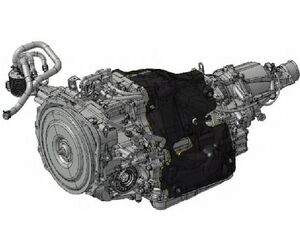
The CVT transmission version named TF690 (Lineartronic) was designed in 2008 for Subaru Outback with the engine capacity equal to 2.5 liters. The second generation was named as TR580. In 2010, this CVT was tested on Impreza with the engine capacity from 1.6 to 2.0 liters. Starting from 2012, this transmission also found application on other Subaru models. The design of middle class CVTs includes a chain instead of a push belt. This CVT is quite sensitive to the fluid state, its cleanness and temperature. There is a special type of oil for this CVT named as SUBARU CVT Oil Lineartronic II (K0425Y0710).
Number of gearsTransmission TypeDriveTorque (Nm)ATF (full capacity) LATF (change) LATF type∞CVTAWD35012,55,6SUBARU CVT Oil Lineartronic II
Technical issues and repair guidelines
The repair kit of gaskets and seals is used to replace rings and gaskets. Rubber rings are replaced when the CVT unit is overheated or if it operates with contaminated fluid (including chips) for a long time. In case when frictions burn to the glue layer, the filter with the mesh is also replaced in the process of the TF690 reassembly. Burnt frictions and Forward steel discs are the first to be replaced. Next on the popularity of the replacement are the metal frictions of the Starter package. The starter pack is responsible for turning the cones on and off when stopping and shifting the lever to the neutral position. Transfer frictions also appear in replacement operations. They are responsible for distribution of torque on rear\front wheel drive.
The TR580 unit has problems with the valve body and a set of solenoids. In previous models these components caused the failure of electrics when the transmission operated with contaminated oil for a long time or under extreme loads and temperatures. When the wear-out of the belt and cones is neglected, then it is necessary to replace the cones. A typical problem with CVT cones in Subaru is related to the input shaft bearing, pressed in the transmission body. This bearing is cranked by vibrations at maximum speeds, and then it breaks.
How to repair this transmission (Videos)Valvebody Replacement with code P2764Breaking down a TR-580
Transmission general data
TOYOTA K210 / XA-15LN
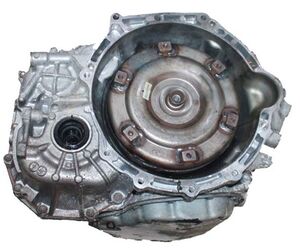
Simultaneously with the first generation of CVTs (K110/K111/K112), the Japanese company Aisin designed a lightweight CVT version K210 intended for small cars (with engine capacity of 1.0-1.5 liters). The right-hand drive Toyota Vitz (engine capacity 1.3 liters) was the first car equipped with this CVT. This car was intended for sale on the domestic market of Japan. Toyota wanted to test this CVT in Japan and fix all possible issues. The first upgrade of K210 was implemented in 3 month after its launch – Aisin engineers changed the belt. This measure helped to improve the car performance reliability at idle speed. In 2004, CVTEC Co., Ltd started production of 30-millimeter CVT belts, which found application in K210 (before that, the K210 gearbox was equipped with the belt of the Dutch company VDT BV).
Number of gearsTransmission TypeDriveTorque (Nm)ATF (full capacity) LATF (change) LATF type∞CVTFWD14585Aisin CVTF7004, Toyota 08886-02105
For the external market (car models not including Toyota), Aisin produced the modification of K210 named as XA-15LN. From 2007 to 2014, this CVT had been successfully used by the company Mazda in its cars (Mazda Demio and Mazda Axela). It should be noted that modifications of the K210 transmission are not interchangeable (or partly interchangeable).
The range of K210/XA-15LN did not receive any continuation. CVTs of this series were installed on a limited number of models of Toyota and Mazda for the domestic market of Japan. These CVTs had been produced before the end of 2015.
In 2004, Aisin developed a new range of CVTs (K410/K411) for Toyota cars with 1.3-1.5 liter engines. This series turned out to be quite successful.
Typical problems:
1) CVTs of K210/XA-15LN series (as well as other CVTs produced by Aisin) are extremely sensitive to ATF quality. In this case, we are talking not only about the presence of metal shavings in ATF, but also about ATF overheating. Shavings in ATF are actually abrasive particles, which eventually (if ATF is not changed) damage Teflon rings in CVT. Then it leads to ATF pressure drops in the transmission itself. Severe wear of Teflon rings over time leads to damage of friction clutches and steel discs.
2) Overheating of the CVT K210/XA-15LN often leads to complete replacement of friction discs. If the driver continues using the transmission with burnt ATF for a long time, then ATF not only loses it qualities and cools the transmission insufficiently (often it leads to overheating and replacement of pistons), but also poorly lubricates cones (especially in winter mode). It leads to slipping of the belt in winter time. Early versions of K210-11A CVT modifications were equipped with belts of the company VDT BV. These belts are not interchangeable with later modifications of belts produced by “CVTEC Co., Ltd.”.
3) Shavings (if ATF is not changed) reach bearings on the input and/or output shaft of cones and eventually one of bearings starts “buzzing”. Bearings are not very expensive, but replacement of
the “buzzing” bearing is possible only with removal and complete disassembly of CVT (this procedure is time-consuming).
4) Some drivers had to deal with the problem of seal leakages in K210. Replacement of seals is usually combined with ATF change
Which cars run with this gearbox?BrandModelYearTypeEngineDaihatsuBOON10-16CVT FWDL4 1.3LDaihatsuBOON/BOON LUMINAS10-11CVT F/4WDL4 1.3LSubaruTREZIA10-16CVT FWDL4 1.3LSuzukiSPLASH08-11CVT FWDL4 1.2LSuzukiSWIFT07-11CVT FWDL4 1.2LToyotaPASSO10-16CVT FWDL4 1.3LToyotaRACTIS06-11CVT FWDL4 1.3LToyotaVITZ05-16CVT FWDL3 1.0L
Transmission general data
TOYOTA ECVT P110 / P111 / P112 / P210 / P310 / P311 / P312 / P314 / P410 / P510
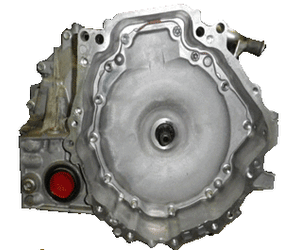
CVT-type automatic transmissions are produced by Aisin for hybrid cars Toyota and Lexus. These transmissions have an initial prefix “P” (it means that these transmissions belong to the planetary type). Some people mistakenly believe that the planetary gearbox cannot be a CVT, but it’s wrong. Planetary gearboxes (not all) have a metal chain (analog of a belt in CVT). Even Toyota considers these planetary gearboxes as CVTs and name them as eCVTs. Undoubtedly, the planetary gearbox differs from standard CVTs (on the global scale the planetary gearbox is not so complicated as CVT), but it is still CVT with its problems and repair peculiarities.
Number of gearsTransmission TypeDriveTorque (Nm)ATF (full capacity) LATF (change) LATF type∞ECVTFWDTOYOTA CVT FLUID FE
The first CVT of the planetary type eCVT (model P110) was manufactured in 1997 and was installed on the first generation of Toyota Prius for the domestic Japanese market. In 2000, this CVT was upgraded for Prius and was named as P111. Toyota Prius equipped with the P111 transmission was sold not only in Japan, but also in the US.
The new planetary CVT P112 was designed in 2001. This gearbox was intended for more powerful (2,4 liter engines) and heavyweight cars (Toyota Estima Hybrid and Toyota Alphard Hybrid). The planetary CVT transmission P112 found application in Toyota Prius, which was sold in Europe, Canada, and USA. The P112 actually became one of the most popular CVTs of planetary type.
The planetary CVT P310/Q211 (named as Q211 for Lexus) was manufactured in 2005. This transmission was specially developed for SUVs with FWD and 3.3-3.5 liter engines. This transmission was installed on hybrid cars Lexus RX400H, Toyota Kluger Hybrid.
The planetary CVT P311 was released in February 2006. It was intended for FWD cars with 2.4 liter engines. In comparison with P112, this gearbox is noted for reduced fuel consumption when the engine
has high RPM rates. In the same year, Aisin started production of the transmission P312 which was designed on the basis of P311. This transmission was supplied to Nissan Motor Company Co., Ltd (for application in Nissan Altima Hybrid in the US market. It was also installed on Toyota Harrier Hybrid 3,3 for the domestic market of Japan.
The eCVT P410 was launched in production in 2009. This transmission was developed for FWD cars equipped with 1.8 liter engines. Peculiarities of this transmission include transfer gear case assembly and possibility of smooth reduction of the engine speed at high RPM rates. This eCVT as well as P112 found application at a global scale, because it was installed on Toyota Prius, which had been sold from 2009 to 2015 all over the world. In addition, the P410 transmission was used for a new range of cars ( Toyota Prius Alpha, Toyota Prius V, and Lexus CT200H.
In July 2009, Aisin released a new modification of eCVT named as P311-03A. This transmission had an upgraded oil pump and engine cooling system. In 2010, Aisin started production of the P410 planetary CVT for plug-in hybrid vehicles.
In August 2011, Aisin started production of a new planetary CVT named P314 for 2,5 liter engines (for FWD and AWD). This transmission was equipped with a new oil pump, which ensured lower fuel consumption. According to Toyota plans, this transmission also should find a global scale application, because cars equipped with this transmission are sold all over the world (Toyota Camry Hybrid (for markets of the US and Japan), Lexus NX300H (for European market), and Toyota Rav4 Hybrid (for all global markets). The P314 eCVT is considered to be quite “new” and it is rarely found in repair services.
In November 2011, Aisin released a new eCVT transmission named as P510. This gearbox has a new design and operates with an NZ-series engines (engine capacity = 1.5 liters). The list of cars which use this transmission includes Toyota Corolla Hybrid, Toyota Yaris Hybrid, Toyota Prius C. The P510 transmission in noted for its light weight, small dimensions, and increased efficiency.
In January 2016, Aisin released a new eCVT P610. This gearbox was intended for application in a new generation of Toyota Prius.
Problems and repair procedures
Abrasive particles often damage oil pump of eCVT , in case of ill-timed ATF change.
1) The planetary gear set wear is often caused by abundance of metal shavings. It is especially common for planetary type CVTs P112 installed on Toyota Prius (produced in the 2003-2008 timeframe).
2) Repair services for eCVTs often include replacement of gaskets and seals (Overhaul kits), pump seal, axle shaft oil seal.
Which cars run with this gearbox?BrandModelYearTypeEngineToyotaPRIUS0EVT FWDL4 1.5L
Transmission general data
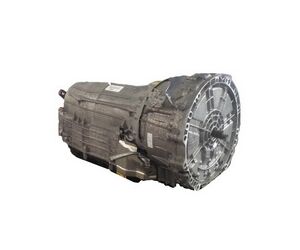
In the fall of 2010, engineers of Mercedes-Benz presented an updated version of the automatic gearbox 7G-Tronic Plus. For the first time this gearbox was applied in the CL-class (216 series). According to representatives of the company, this gearbox became more comfortable, quick-operating and economical than its predecessor. The 724.2 gearbox is equipped with the torque converter of a new generation. This torque converter is more durable; it has reduced noise level and faster response time thanks to innovative technology. In addition, this gearbox is equipped with the “start-stop” system. The engine RPM gets reduced in the ECO mode that significantly contributes to fuel economy.
Number of gearsTransmission TypeDriveTorque (Nm)ATF (full capacity) LATF (change) LATF type7Hybrid SystemRWD9,5236.15
The 724.2 gearbox undergone systematic optimizations to reduce energy losses caused by traction. This and other measures made it possible achieve 7% fuel economy. In 2012 a new car Mercedes-Benz SL was equipped with the 7G-Tronic Plus. The roadster became the first car of Mercedes-Benz, which was equipped with a newly developed Direct Select paddle shifter on the centre console. This feature is used for more dynamic driving style. The latest changes in 7G-Tronic Plus were introduced in 2013. The updated version of this gearbox was used in E300 BlueTEC HYBRID, where the 20 kW e-motor was integrated in the case of the torque converter. In 2013 the 7G-Tronic was replaced by the 9G-Tronic automatic gearbox.
Peculiarities:
- 7-forward gears: increased difference between gear ratios of lowest and highest gears, while maintaining small intervals between gear ratios in other gears, increases driving comfort.
- Optimal engine RPM contributed to low fuel consumption and smooth gear shifting.
- Solid power reserve: fast accelerations became possible thanks to reverse gear shifting with omitting of several gears;
- New generation torque converter: reduced wear, lower noise level and better responsiveness thanks to innovative technology.
- Reduced fuel consumption: the function “Start-Stop ECO” ensures that the engine switches off temporarily when the car gets stick in traffic jams of stops at traffic lights.
- Comfort and sportiness: drivers can choose from 3 operation modes: «E» (Economy) – to reduce fuel consumption, «S» (Sport) – for sporty driving style, «М» (Manual) – for rapid gear shifting with the help of paddle shifters.
Which cars run with this gearbox?BrandModelYearTypeEngineMercedes-BenzC-CLASS14-167 SP R/4WDL4 2.0L 2.2LMercedes-BenzC-CLASS COUPE15-167 SP RWDL4 2.0L 2.2LMercedes-BenzE-CLASS12-167 SP RWDL4 2.2L V6 3.5LMercedes-BenzGLC15-167 SP 4WDL4 2.0L 2.2LMercedes-BenzML-CLASS15-167 SP 4WDV6 3.0LMercedes-BenzS-CLASS09-167 SP RWDL4 2.2L V6 3.0L 3.5LMercedes-BenzS-CLASS COUPE15-167 SP RWDV6 3.0LMercedes-BenzSPRINTER13-167 SP RWDL4 2.2L
How to repair this transmission (Videos)7G-TRONIC Plus Transmission
Instruction manuals and useful linksLink typeSourceDescriptionpdfeuropeantransmissions.com7G-TRONIC PLUS
Transmission general data
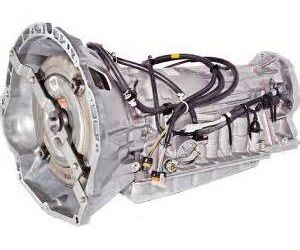
The rare 4-speed automatic transmission AW450-43LE had been installed since 1998 until 2007 on the RWD model ISUZU NPR/ NQR. with engines capacity of appr. 5 liters. In terms of design, this transmission is similar to AW442F. In most cases Isuzu models come to repair shops with the purpose of fixing the transmission.
Number of gearsTransmission TypeDriveTorque (Nm)ATF (full capacity) LATF (change) LATF type4ATRWD12,56Type T-IV
Technical issues and repair guidelines
This transmission for RWD vehicles is very reliable as all Aisin transmissions with high torque capacity. In most cases, problems occur in old vehicles and mainly associated with their age. If the car owner keeps track of the thermostat condition, then the lifespan of the automatic transmission AW450-43LE can exceed the service life of the car itself.
The torque converter is the first component to get out of order in this transmission, then it leads problems with the worn-out oil pump and bushings. The repair kit of gaskets and seals is included in the common order for a complete reassembly of this transmission. Rare repair cases usually include replacement of the Direct package. In most cases friction friction components of this package are the first to get burnt because of high loads. Frequently, this transmission comes to the repair shop completely burnt friction elements. In such cases, specialists order a full kit of frictions as well as the kit of steel discs.
Which cars run with this gearbox?BrandModelYearTypeEngineIsuzuELF97-154 SP R/4WDL4 3.1L 4.6LIsuzuTRUCK NPR99-074 SP RWDL4 4.75L 5.2L DIESELMazdaTITAN04-154 SP R/4WDL4 3.1LUD TrucksCONDOR97-144 SP R/4WDL4 3.1L 4.6L
How to repair this transmission (Videos)450-43LE Teardown
Instruction manuals and useful linksLink typeSourceDescriptionpdfSonnaxValve Body Layout AW45043LE
Transmission general data
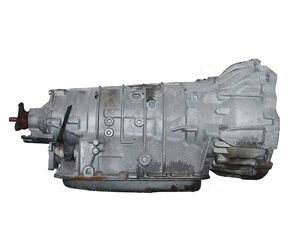
The 4-speed automatic transmission 4L40E produced by GM found application on the most common BMW 318 (since 1998). This automatic transmission was designed on the constructive basis of a reliable 4L60E, but were produced in Europe for the Bavarian automobile factory. This range of automatic transmissions replaced the 4-speed 4L30E and had been in production until 2007, when GM replaced these transmissions with the 6-speed 6L45. In terms of design the 4L40E (5L40) is the most simple, robust and reasonably priced transmission.
Number of gearsTransmission TypeDriveTorque (Nm)ATF (full capacity) LATF (change) LATF type4ATRWD36095,5-6Dexron VI
Technical issues and repair guidelines
The repair of this transmission mainly lies in the replacement of filter, gaskets and seals (preventing oil leakage), and replacement of burnt friction elements. All parts are interchangeable with 5L40E and 5L50E. Frictions are one-sided as in the popular DP0 transmission. The pack (Direct Clutch; 2nd Coast) burns twice as frequently as other clutch packs.Generally, this gearbox is considered to be reliable and almost “invincible”, when avoiding heavy ATF contamination by friction dust and the abradant which wears out not only friction nodes, but also the valve body.
This issue (oil contamination) often results in self-regulating pump becoming “unregulated”, also remaining in the mode of ultimate capacity. It leads to the rapid gear-shifting as well as to increased pressure in packages resulting in pistons damage. Issues with pistons is a typical soft spot for the 5-speed 5L40E and 5L50E (BMW Х5). The rubber-covered piston (forward) most commonly gets out of order because of its design peculiarities.It is usually recommended to take care about the ATF quality for this transmission.
Which cars run with this gearbox?BrandModelYearTypeEngineBMW3-SERIES00-054 SP RWDL4 1.9L L6 2.0L 2.8L
How to repair this transmission (Videos)Part 1 Transmission ServicePart 2 Transmission Service
Instruction manuals and useful linksLink typeSourceDescriptionpdfshinseiauto.comScheme 4L40E
Transmission general data
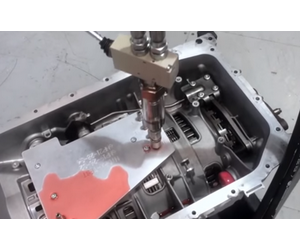
Leak test units allow checking circuit integrity for transmission units through use of hydraulic pressure. These tools guarantee time saving since modern models do not require removal of the transmissions off vehicles. It is a universal machine which merely requires appropriate leak test plate to fit any automatic gearbox. The 4L60 transmission, 4L80 transmission, ZF transmissions are some of the most demanded for this transmission service.
The answer to the question on the reason of oil flowing out of the transmission troubles many transmission specialists. Transmissions oil leakage is in the group of problems with which almost every driver ever found. Under the car there are oil stains that are gradually increased. Set of lubricants is considered to be an important part of the vehicle. Such a problem leads to major failures. Friction of the contacting parts goes uncontrolled, wear debris is stopped from leaving the drivetrain, the assembly doesn’t cool down. It is unsafe and could cause fire.
Various leaks at the junction of gearbox and engine most likely can occur due to the following reasons: wear-out or failure of seals, various defects in shafts and seals, emergence and increase of clearance in the shafts (input shaft, etc.), sealing compound fails to provide the desired sealing, loosening of clamp holdings, failure of properties of seals and gaskets and other effects.
Transmission general data
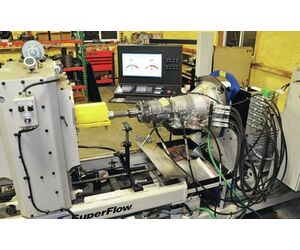
Dyno stands allow testing complete gearboxes in assembly checking their performance and understand if it is comparable to benchmark characteristics. It is the tool that is certainly needed to provide certified transmission quality. There are options that allow advanced testing of FWD, RWD, AWD automatic transmission vehicles, for both civil and heavy duty models. A dyno stand used to be an expensive option for big-scale car transmission rebuilders but more accessible quality options start to emerge on the international transmission service market.
Why is it important to use a transmission dyno test stand?
What are key components of a transmission dyno?
What is the difference between electric motor and combustion engine dynos?
Principle of operation |
What types of load cells are there in the dynos?
History of transmission dynos on the industry market
Pressure gauges in transmission dynos
Importance of hardware with transmission dyno stands
Importance of software with transmission dyno stands
Major suppliers of automatic transmission dynos
The
transmission of an essential part of a vehicle drivetrain system, transferring
power to the wheels, doing gear switching, distributing load. Depending on the
context, to a large degree term ‘transmission’ is synonymous to ‘gearbox’.
What is the utility of using transmission dyno test equipment?
In the
transmission repair industry, testing of a complete automatic transmission unit
is imperative for large remanufacturing companies dealing with large repair volumes,
is quite desirable for medium-scale companies working widely on the national
level and supplying to other countries, and is a dream for smaller transmission
shops that always do test-on-the-car checks to verify the repair procedure. In
addition, many educational institutions (like tech colleges) need dynos for
proper students’ skill-learning process. Production companies use transmission
dynos in their EOL tests (end-of-line testing).
“Dynamometer”
consists of two words - dynamo (Greek for “power in motion”) and meter (also
Greek for “measurement”). Very often, it is simply called as “dyno”. A dyno
stand used to be a costly tool solely for big-scale transmission rebuild shops,
nowadays, however, more accessible options of these tools are emerging on the
international transmission service market.
One who is new to transmission repairs may actually
wonder: ‘Why a transmission should be dyno tested?’ It is primarily about
warranties and guarantees given by the provider of repair services. A dyno test
ensures that a transmission is performing well and adequately under certain
conditions of operation and this gives a huge grade of certainty that the
transmission will last full life expectancy.
The dyno testing means that you mount a transmission
in the dyno test rig and drive it through various paces. The idea of such
testing is simulation of real-life operation conditions as if it were driven in
the car on the road. At this, the gearbox is taken through a complete set of
operations, with gear and speed switching, and in each gear operation is
performed through the design speed range. Certainly, it is vital to capture
output values, and these are monitored in the test process.
Reputable transmission remanufacturers set their goal
to return the rebuilt product to original factory specifications. With dyno
testing, the following key parameters are checked: torque, temperature,
pressure. Also, operations efficiency is checked and sensor functionality test
is performed. The tech operator is able to verify bolt torque and presence or
absence of leaks in the system. To put it straight, the dyno test assures that
your gearbox operates according to the factory specifications with due regard
to design speed and range of gears.
You need to dyno test gearboxes when:You strive to provide top quality
of your rebuilds.
You want to be sure of the
longevity of warranties that you give.
You want to speed up your repair
processes.
Your partners who contract you in
large volumes need assurance of compliance with highest reman standards.
You value your shop’s reputation
and you want to avoid unwanted returns damaging
Basically, without dyno testing you have difficulty
proving that the gearbox will not fail in operation conditions. Although the
guarantee might have a fault covered, it is your reputation that you need to
protect and avoid frustration when a gearbox is returned back with faults.
What is more, health of the transmission means that no
harm will be done to the drivetrain and no further damage to the engine.
Another vital idea is that a high quality reman transmission can be better
performing than a new factory one. This is important for transmission
performance shops and racing car
workshops.
What are key components of a transmission dyno?
It is important to understand key components of a dyno
test rig as a transmission specialist may wonder how it functions.
Primarily, modern
dynos are fully digital and allow for highly accurate easy-to-perform
repeatable automotive transmission testing. The important factor here is
software and hardware, which is realized in the controller system. These dynos
simulating automotive load conditions are typically quite universal and
adaptable to various modes of wheel drive and automatic transmission types
(including CVT transmissions). In order to cover this universality the test rig
is performed with due regard to capacity requirements, motor horsepower specs,
number of load cells. Let us cover the components of the body of a transmission
dyno.
High-output motor (nowadays it
would be an electric motor)
Load unit (for dynamic loaded
testing). At this, number of load cells is varied for various applications: 1
unit – for RWD (rear-wheel drive) vehicles, 2 units – for FWD (forward-wheel
drive) vehicles, 3 units – for AWD (all-wheel drive) vehicles
Jib crane for transmission mounting
and dismounting
Pumps with hoses to fill and drain
transmission fluid
Pressure sensors
Oil tank and drip trays
Stall brake
Quick release hose fittings
Additionally:
Electric shuttle motors allowing
positioning for different transmission configurations
Tooling kits for transmission
positioning avoiding any potential harm to pumps or certain transmission
components
Bushings for precise transmission
alignment
What is the difference between electric motor and combustion engine dynos?
Modern dynos run on electric motors, they use
electricity stored in batteries and power electromagnets driving axles.
Combustion engines run on gasoline, which
explodes in an enclosed space – it is a well-known process happening in most of
the cars driving on our roads, hence the name. In vehicles, this combustion
moves pistons, which rotate engine’s crankshaft and all that controls rotation
of the vehicle’s axle. This solution is pretty much obsolete and not used in
up-to-date dynos for a number of reasons:
CE has many more parts and occupies
more space (CE with ~2000 parts and EM with ~20 parts). Fewer parts also means
easier serviceability and maintenance.
Disposable fuel with electric
motors, while in a combustion engine, the disposable fuel is gasoline, which
must be carefully stored, as there is a danger of ignition. What is more, fuel
leftovers must be exhausted out of the after combustion.
Electric motor battery packs are
expensive but gradually become more accessible.
With electric motors little energy
is wasted, but with combustion engines quite a serious percentage of energy is
lost along the way. Therefore, it’s the gas-powered vehicle that needs more
energy.
It is more comfortable and
convenient to service an electric motor in a transmission shop surrounding, if
comparing to a combustion engine.
Overall, 75kw (or ~100 horse power) is enough to
drive modern transmission dynos for light-duty and medium-duty application. At
that, electric motors are very much preferred.
Principle of operation
It is
important to distinguish transmission test stands from these two types of dyno
stands: engine dynamometers and chassis dynamometers. With engine dynos, the
engine is removed from the vehicle and installed on the stand by connecting
directly to the flywheel. For this purpose, transmission specialists use
special adapters and it is also necessary to connect the cooling system, as
well as some other components - this procedure takes a lot of time. Engine
developers and manufacturers mainly use these stands.
Chassis dynos allow for testing of the vehicle
as it is driving on the road, fully assembled. These are rather popular among
people doing racing cars or performance vehicles.
Transmission
testing stands are suitable for both transmission manufacturers and
transmission repair service shops. During testing of complete gearboxes their
performance is compared against benchmark characteristics. Multiple readings
are taken using corresponding sensors and transducers, their readings are
converted to visually explicit and perceivable information. Obviously,
transmission dynos vary in their design to cover FWD, RWD, AWD automatic
transmission vehicles, support and fit civil light-duty and/or heavy-duty
models. Precision alignment tooling and data acquisition & control systems
play an important part in quality transmission testing.
What types of load cells are there in the dynos?
Dynamometers are classified by the method of creating
a load. Nowadays, the accepted brake standard in a transmission dyno is eddy
current brakes.
EC brake is an electrically controlled brake with air
cooling. In it, load is created by inducing a magnetic field in a rotating
disc. Heat produced by the rotating disc is dissipated in air. Moving parts are
stopped by EC brakes with the help of drag force. These brakes are a great
option for lower power applications and dynos up to 250 hp.
Water brake works on the transfer of water momentum
creating load on the tested unit with the absorbed power heating water.
Usually, these consist of a turbine / propeller, which is mounted in an
enclosure with water. Water brake are for high power applications far over 250
hp. Largely, for engine dynos with thousands of hp.
Alternating current dynamometers are another option
which is less frequent when compared against EC’s. These are used for engine
dynos and the idea is in mimicking the load placed on the engine as it powers
vehicle.
History of such equipment on the industry market
Transmission
testing equipment has a particular history in the USA, the leader of car
industry. The world’s largest manufacturer for this type of equipment –
PowerTest – is located in Wisconsin. They started in 1976 and grew to acquire a
large number of brands and companies from the industry. Nowadays, PowerTest
owns such brands as AIDCO, Axiline, Hicklin – all of them shall be known to
people who spent decades in the transmission industry.
Another
well-known US manufacturer is MAE (Mustang Advanced Engineering) who were on
the market since 1970’s as well. As of today, they provide a system for testing
automatic passenger car and light truck inline and transverse transmissions as
well as systems for medium- and heavy-duty applications.
There are
some other companies located in the USA but they are far less active and less
known to a global audience, as of today.
Although, dynamometers have been around since as
far as the 18
th century, quality transmission dyno options are not
as many as one might have thought.
In the 21st
century, USA are not sole prominent manufacturers and they need to compete with
companies like RayTech from China or Hydra-Test from the UK for the global
buying audience.
Pressure gauges in transmission dynos
In previous decades, the equipment output gauges were
analog but nowadays there is obvious tendency for digitalization. With modern
control systems, the process of running through gears and checking electronic
solenoids is automated. One single system runs many different vehicle and
transmission types.
If a transmission stops working because of a sensor,
harness, connector or solenoid, it will be visually shown on the screen,
explicitly as to identify this failure. Comprehensive data on each sensor can
be compared against the benchmark result and thus it will be easy to determine
whether that particular sensor is good or bad.
Multiple fluid
pressure gauges enable thorough shift timing evaluation and adjustment.
Controller box ordinarily comes for 8 pressure sensors with quick fit
connectors. This can be expanded to 2x times (total 16 pressure sensors) if
this happens to be required in the technological process. Readout in modern
dynos is easy to adjust for any needs – especially if the software is
appropriate for client-specific demands.
Importance of hardware with transmission dyno stands
Modern
advanced dyno stands allow control and full testing of electronically shifted
Mechatronic gearboxes and valve bodies. The importance of hardware for such
dynos cannot be understated.
Modern dyno
stands provide complete computerized control and with that extremely precise
test procedures are easy to repeat. Some companies like Axiline concentrate on
the US domestic market. However, the range of supported gearboxes is typically
large: the dynos fit most USA home and non-national RWD, FWD, transverse, and
Continuously-Variable Transmission gearboxes. These dyno stands check:
gearbox
line pressure,
TC
lockup and downshift,
shift
point and response,
stall
speed, and more.
At this,
emulated load conditions for vehicles are applied and speed and load are
measured with potentiometers. Transmission rebuilders will be able to
confidently spot ATF and pressure leakages, check controls of the systems and
hydraulics, and perform minor corrections with the gearbox still being mounted
on the tester.
Reliability
of hardware and flexibility of software are equally important for efficient use
of transmission dynos.
Hardware is
the brain of a transmission test stand. You do not have to be an IT-specialist
to know to value enduring components that will serve to last for years and that
will be protected from any electric malfunction.
In many
cases, a physical body of the transmission dyno is still able to last for
years, however, the hardware or the controller itself is very obsolete and
cannot meet demands of those new development that have come by recently. When
looking for such an advanced tool, it is also vital to look into this aspect of
the equipment – how is it going to be supported after a couple of years of
operation.
For
instance, the most-professionally done Chinese dynos are looking really good,
but the hardware part here is just a contribution and doesn’t bear any
advantages. Axiline (at PowerTest) has quit updates for their controller system
and just go with what had been on for many years now.
A good
option to look into are companies that supply controller systems separately
form the dyno testers. This means that they are concerned about all the aspects
of the equipment: physical, hardware, software – and can deliver a lasting
product. Hydra-Test’s HTC-S is adaptable for existing dynos from former years. If
the machine has served years and is still functioning well, it can be easily
refitted with a new controller box – enhancing the functions and data
validation and processing.
For instance, among
transmission dyno users from the USA and Europe there is often a situation when
their current system is obsolete and shows the following deficiencies:
Difficult process of programming new units.
Inability to smoothly ramps solenoid current.
No support for newer developments that came into market after 2020.
Absence of reliable tech support from the manufacturer.
Current transmission controller being no longer in production.
A new
controller generation tackles these issues quite successfully and relatively
easy. If you happen to be negotiating with a particular company’s manager, ask
all of those questions upfront. New controller systems ideally have to come in
a modular format when it is possible to build up a controller from several
modules facilitating the support and any future upgrades.
New units
coming to the market can be controlled efficiently with adaptability and
flexibility of software. Ask your supplier if it is possible to write your own
test scripts, this feature may be hidden but is pivotal for efficient use of
transmission dynos.
Interpolation
feature allows for solenoid ramp up, and with ease. New developments like
Mercedes 722.6 or latest Chrysler models (like 68RFE) are supported equally
with older designs.
Technical
support is pivotal here. You do not want to be stuck with a fault that your
supplier cannot be resolved for you. Large transmission equipment companies or
companies coming from non-European countries oftentimes have these issues.
As an
important note, remember that mechatronics have a different testing method and
a 3
rd party supplier of equipment cannot have OEM access codes.
Their use is restricted and protected. Therefore, do not expect that your
transmissions can be tested along with their mechatronics components. It is
simply not the case.
Mechatronics
are excluded from the testing circuit with universal transmission dynos. They
are tested separately by individual OEM tools – like ZF Testman and the like
for other OEM’s. Double- or triple-check it if your potential supplier promises
to supply mechatronics testing with their equipment.
Importance of software with transmission dyno stands
The IT field is on the rise and its advancements have
also concerned the pretty much conservative transmission repair industry. When
considering a transmission dyno, check for the following factors:
Date of software release
Frequency of software updates
Ease of update installations
Presence of online tech support
Possibility of desk sharing
sessions (for example, via TeamViewer)
Flexibility of operational
algorithms and their adjustments to clients’ needs
Convenience of output data readout
and printing out
Attractive and user-friendly design
In fact, the software factor oftentimes goes without
notice but it plays an essential role in efficacy of the dyno system. Just
imagine running your high tech tool on Windows XP when it is 2020’s. This
discriminates the whole investment.
Major suppliers
Nowadays, it
is easy to commerce internationally and the suppliers are not limited to their
local markets. US companies supply to Europe and to Turkey, Chinese suppliers
have clients in the Middle and Near East. European suppliers have clients all
across the globe – from Mexico to New Zealand. A certain group of suppliers
works chiefly for the post-USSR countries.
1. Power Test
Active
since: 1970s
Location:
Wisconsin, USA
Types of
equipment supplied: transmission dyno test stands, engine dynos, chassis dynos,
valve body test stands, torque converter repair equipment, and other (all via
different brands – Axiline, AIDCO, TCRS)
About: on
the market for over 40 years, Power-Test has been providing test equipment to both
manufacturers and rebuilding facilities and distributors in various field of
industry. These include mining, oil & gas, power generation, and
particularly military applications, marine, and construction.
Product
updates: not recently.
Power Test
has been acquiring local USA companies under one hood and is the largest
company producing these types of products in the world. At that, the most
powerful products are by AIDCO as they are for military applications. Test
stands for transmission shops come as contributing to overall Power-Test
profile.
CHECK OUT
PRODUCTS
https://go4trans.com/superflow-dynamometers-and-fl...
2. RayTech (Guangzhou Ray Technology Solutions)
Active
since: 2010s
Location: Guangzhou,
China
Types of
equipment supplied: transmission dyno test stands, valve body test stands,
torque converter repair equipment, and transmission parts.
About: Some
Chinese suppliers cannot be counted on, simply because of how they present
their product. RayTech is different in these terms although their web presence
is also a little unclear to a European or American potential buyer. They also
take part in certain expos across the globe.
Product updates: new test plates for RayTech
equipment.
Raytech is
probably a most recognizable supplier of transmission equipment (along with a
Chinese company TranSpeed). Despite having a good portfolio and attempts to
position their products, some proper online presence could be improved. This
supplier may be best to be contacted via Chinese local trading platform.
3. HYDRA-TEST
(Cottingham Engineering LTD)
Active
since: 1990s
Location: Kettering,
United Kingdom (head office) / Minsk, Belarus (daughter production company)
Types of
equipment supplied: transmission dyno test stands, valve body test stands, torque
converter repair equipment, valve body repair tools.
About: at
this day, Hydra-Test is the only prominent and reliable transmission repair
equipment supplier from the United Kingdom. In 2019, the company opened a
subsidiary production office to be more competitive in terms of product
production cost and be able to deliver most reliable support quality. Valve
Body testers by Hydra-Test are known for durability and full coverage of
clients’ demands. Hydra-Torque equipment fabricated in the Belarusian division
since 2017 has been supplied to various countries, including a heavy-duty
application. The team is also open for custom-built solutions and delivers them
in exact match to clients’ needs.
Product
updates: Hydra-Dyno (launch of transmission dyno production), HTC-S (newest
controller generation), 0AM valve body test tool.
ThisUK
supplier is well-known for their attitude, constant update of available
solutions. Opening a production site in Belarus is also an advancement. Some companies
from post-Soviet territories can be barely counted on. However, if guided by
European service standard, it is a great combination of affordable price and
highest quality of transmission repair.
CHECK OUT PRODUCTS https://go4trans.com/hydra-torque-transmission-dyn...
4. Mustang AE
Active
since: 1970s
Location: Ohio,
USA
Types of equipment
supplied: dyno test stands for a huge variety of applications (including
transmission dynos), solenoid testers.
About: on
the market for over 40 years this company has launched a series of equipment
for various applications, including military sector, heavy-duty equipment, and
more. The company aspires to deliver creative thinking to drive continued
success. They are one of the leaders in delivering sophisticated dynamometer
technologies and advanced engineering capabilities.
Product updates: not recently.
Mustang
AE’s growth has been hindered recently but it is a supplier worth referring to
at least for comparison. A company with such a serious portfolio that includes
emission measurement system fabrication, own design services bureau and more is
certain to work on transmission repair clients’ requirements in a diligent way.
5. Extra:
We tried to contact alternative Chinese and USA suppliers to provide more info for consideration here but were treated with silence or an awkward invitation to come to China to see the machine and learn about pricing.
How to repair this transmission (Videos)RockAuto Auto Parts transmissio being dyno testedG-TEC: transmission dynoPowerglide On The DynoTransmission dyno upgrade with Hydra-Test HTC-S controllerTransmission dyno at Certified TransmissionsG-TEC: DYNO Transmission Tester for "light" vehiclesHow your Transmission was Dyno TestedSupeflow. Axiline transmission dynamomenter
Instruction manuals and useful linksLink typeSourceDescriptionpdfhttp://promand.com.auAXILINE 66K TRANSMISSION DYNAMOMETERpdfSuperflowAxiline 97000 dyno brochurepdfPowertestPowertest transmission dynos. Product brochurewebMAEMustang MAE transmission dynoswebGearstarWas your traansmission dyno tested