
Technical articles
Technical Transmission General
General Transmission issues are varied and may include several causes and ways of treatment. Transmission experts share their knowledge and provide useful tips for the industry people to follow.
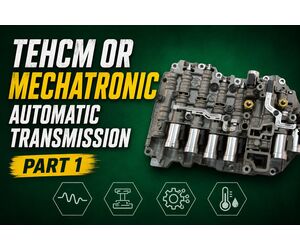
Every automatic transmission specialist has their own method of dealing with Transmission Control Modules and mechatronics units issues. Some rebuild them, some replace them, but most curse this complex part of the gearbox. However, do we all know them well? To begin, let us review on what we know about valve bodies.
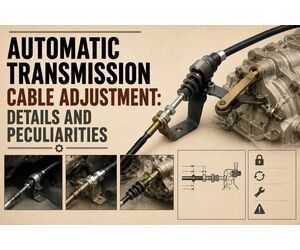
Automatic transmission failures frequently manifest
themselves in kicks and jerks when shifting gears (car with automatic
transmission starts to consume more fuel).
There
may be many reasons for the abovementioned symptoms, but a specific reference
should be made to the automatic transmission cable.
In this article, we will consider the process of
transmission adjustment, or, to be more precise, transmission cable adjustment
and its peculiarities.

As a rule, many car owners assume that various
technical liquids and lubricants, including transmission fluid, do not have an
expiration date , i.e. they can be stored as long as necessary before intended
use. But it is a mistaken belief, because the shelf time of transmission fluids
is limited by manufacturers. In this article, we will consider this issue in
more detail.
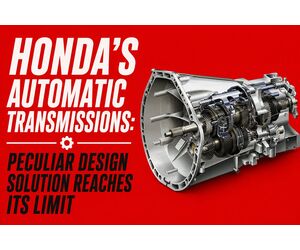
Design solutions implemented in Honda cars
frequently surprise the automobile community by peculiar technological
approaches. One of the brightest examples is the design of automatic
transmissions developed by Honda engineers. In this article, we will consider the main
features of Honda automatic transmissions, their pros and cons, as well as the
specifics of their maintenance.

With the progress in transmission technologies, many carmakers started
to use dual-clutch transmissions instead of standard solutions. One of these
dual-clutch innovations (DCTs) is the Powershift transmission designed by Ford.
In this article, we will consider the main features of this transmission, its
design peculiarities, and typical repair issues.
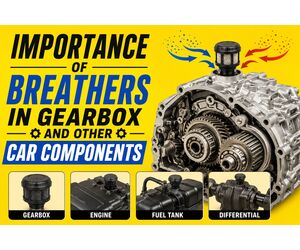
The design of modern cars includes a large
number of components and assemblies, which are filled with technical fluids and
lubricants. During operation, these fluids heat up, in other words they
increase in volume, thereby increasing the pressure inside the car components
and internals. This pressure difference must be leveled out to
prevent depressurization, fluid leaks, and damages of car elements. For this
purpose, some car components are equipped with a special valve, known as the
breather.

Nowadays, the world’s leading car manufacturers
actively install pre-selective gearboxes (also known as DSG or robotic
gearboxes) in their new car models.This type of transmission is considered to be an ideal substitute for
traditional automatic transmissions and CVTs. In this article, we will review a bright DSG option – S-tronic.
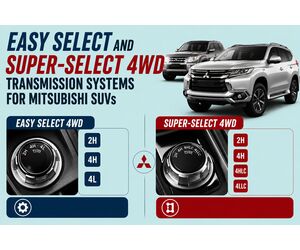
It is important to understand that the off-road
qualities of any car directly depend not only on the engine, but also on the implemented
transmission drive system. In this article, we will consider Easy Select and
Super Select drive systems installed in SUVs produced by Mitsubishi.
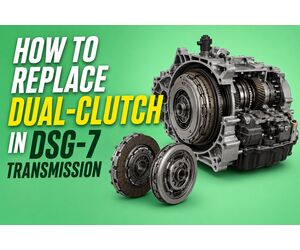
The DSG transmission combines in itself
features of classic automatic (comfort of operation) and manual transmissions
(fuel efficiency). Currently, there are several DSG transmission
models available on the market, namely, DSG-6, DSG-7, and Audi S-tronic. In
practice, DSG transmissions are quite problematic in terms of repair, especially DSG-7. Due to high repair costs for this transmission many drivers try
to fix the DSG-7 gearbox independently. In this article, we will consider how to replace the clutch pack in the DSG-7 transmission.
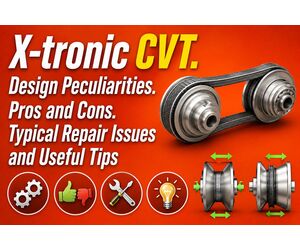
Today, many manufacturers equip their cars with
continuously variable transmissions (CVTs). This transmission solution provides
smooth change of the gear ratio parameter. Thanks to this peculiarity, CVTs
have high efficiency and ensure maximum comfort while driving.
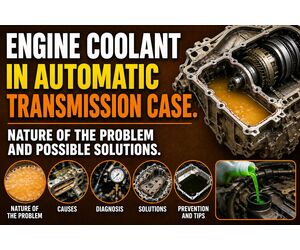
Transmission repair specialists frequently have to deal with such an
issue as the mixing up of engine coolant (antifreeze substance) with the
automatic transmission fluid. It is a very serious problem which can lead to
the transmission failure and highly-priced repair or even transmission
replacement. In this article, we will consider causes of this problem and
possible solutions.
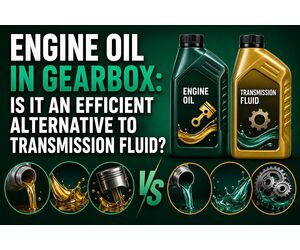
Young drivers sometimes wonder whether it is
possible to use the engine oil as a lubricant for transmission parts. This is
due to the fact that modern engine oils are designed for heavy loads and also
include a wide range of active chemical additives for operation under severe
conditions. In this article we will address this question.